
Sağlık · May 3, 2026 · 4 min read
Spring Baby Nutrition: When Strawberries and Plums Hit the Table
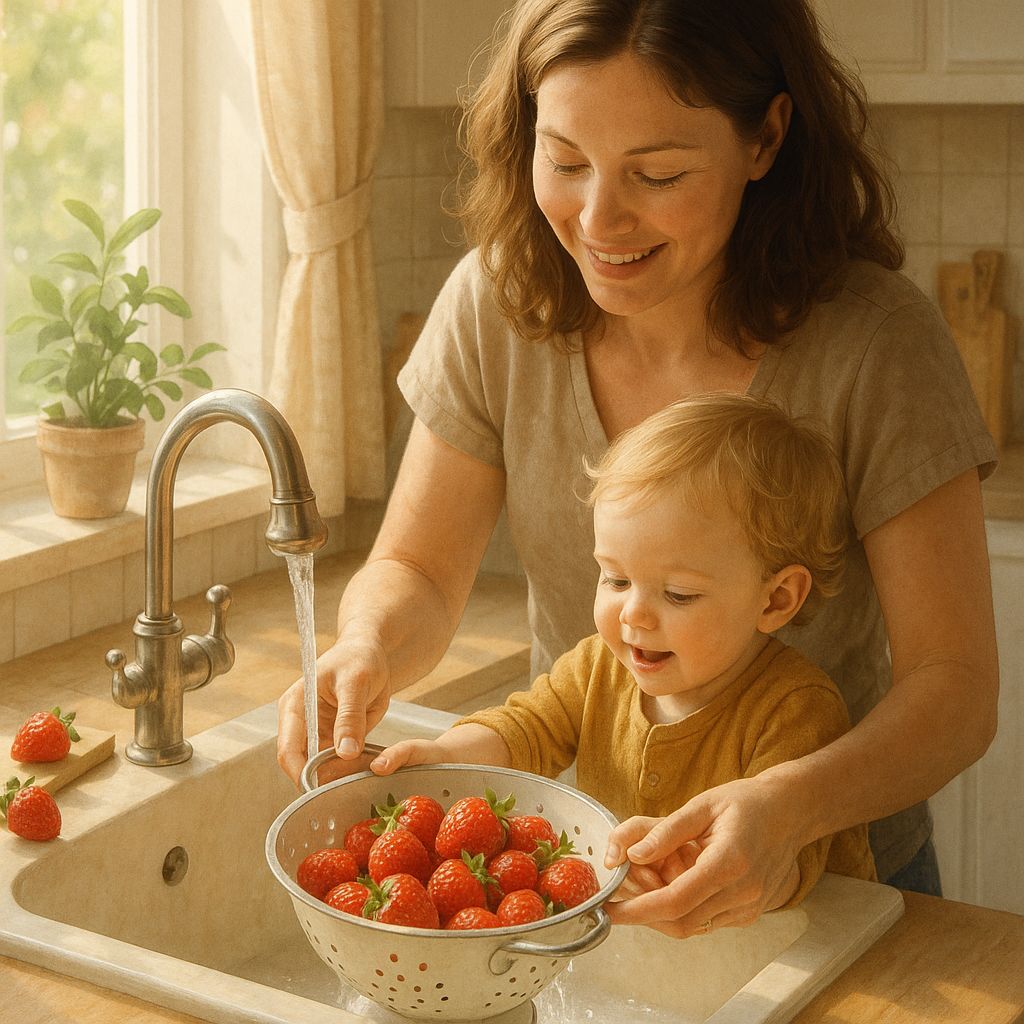
## Spring Brings Color to the Table
Late March, early April — first trips to the park, light jackets, and bright red strawberries piled high at the market stalls. A question that comes up for so many parents this time of year is: "Can I give my child these fruits, and how much is okay?" The answer is both **yes** and **a little patience**.
## Which Fruit at Which Age?
According to the World Health Organization (WHO) and national health guidelines, introducing solid foods generally begins around **6 months of age** — though every baby is different, and it's always best to make this decision together with your child's pediatrician.
- **6–8 months:** Pitted plum puree can be a wonderful first fruit. Its fiber content supports digestion and acts as a natural remedy for constipation.
- **8–10 months:** Strawberries are typically introduced around this stage due to their allergenic potential. When offering them for the first time, start with a small amount and wait 2–3 days to watch for any reaction.
- **12 months and up:** You can offer fruit in small pieces (roughly 1 cm). Round, firm fruits carry a **choking risk**, so always supervise your child while they eat.
- **2–5 years:** Children at this age can generally eat whole pieces of fruit — just stay mindful of seeds and stems.
## Watch Out for Allergy Signs
Strawberries can cause mild allergic reactions in some children, such as redness, itching, or a rash around the mouth. If you notice these signs, **simply remove that fruit** from their diet and let your doctor know at your next visit. In the case of a severe reaction — such as difficulty breathing or widespread swelling — seek emergency care right away.
## How Much Is the Right Amount?
The question of "how much?" often trips parents up with little ones. A simple rule of thumb: **a palm-sized handful of fruit** is plenty for 1–2 daily servings. Choose whole fruit over juice — that way your child gets the full benefit of the fiber and micronutrients.
## Practical Prep Tips
- Wash strawberries thoroughly **under running water** and remove the stem and leaves.
- Whether you **peel plums or leave the skin on** doesn't make a huge difference — but for a first try, peeled and pureed is the safer choice.
- You can **freeze** seasonal fruits and use them well into summer — their nutritional value is largely preserved.
- Strawberry puree mixed with yogurt makes a delicious and easy snack for babies 8 months and older.
## A Final Word: Have Fun, Don't Force It
The spring table is colorful and exciting — so don't be discouraged if your child turns their nose up at something the first time around. Research shows it can take **8 to 15 tries** before a child warms up to a new food. Small portions, playful presentation, and eating the same food yourself are the most powerful encouragements you can offer. Every child develops in their own unique way — and whenever you're unsure, don't hesitate to reach out to your pediatrician.
Foods mentioned in this post
⚕️ The content in this article is for informational purposes only; it is not medical advice. For decisions about your baby's health, consult your pediatrician.