
Beslenme · May 14, 2026 · 4 min read
Plums in Spring: The Big Nutritional Secret of a Little Fruit
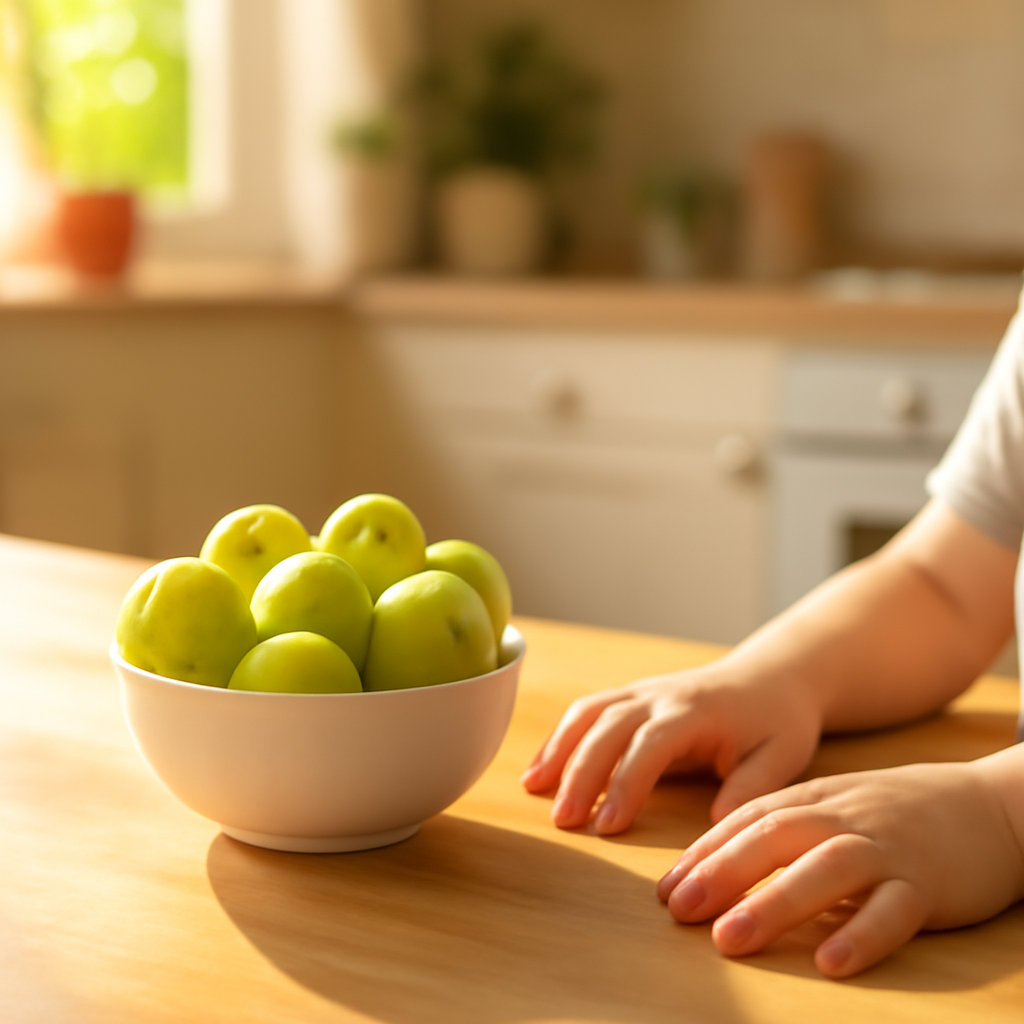
## Why Is the Plum This Season's Star?
Plums may not get as much buzz as strawberries when spring rolls around, but they quietly make their way onto our tables as one of the season's most nourishing fruits. Fresh yellow and green plums — not quite fully ripe yet — start appearing at markets around mid-May, and they're packed with vitamin C, potassium, and fiber. Plums are especially known for supporting healthy digestion in young children, and when offered in the right amount and the right form, they make a wonderful snack.
## A Note for Under 1 Year
If your baby is between 6 and 12 months and just getting started with solid foods, skip offering raw plum for now. Instead, try serving it **steamed until soft and mashed into a smooth purée**. Raw plum can be hard on little tummies at this stage, and the tart flavor might earn you a very dramatic scrunched-up face — which is completely normal, so don't give up! Whenever you introduce a new fruit, always wait 3–4 days and watch for any signs of an allergic reaction. If you have any concerns, check in with your pediatrician.
## Ages 1–3: Small Pieces, Big Fun
Choking is still an important consideration at this age. When serving plums, follow these steps:
- Always remove the pit.
- Cut the fruit into quarters or sixths and offer it in thin slices.
- You don't have to peel the skin, but for sensitive tummies, peeled plum may be easier to digest.
- **1–2 small plums per day** is plenty; more than that can cause loose stools due to the high fiber content.
Practical idea: A small bowl of **yogurt mixed with grated plum** makes a tasty and nutritious afternoon snack for children 18 months and older.
## Ages 3–5: Time to Join In the Kitchen
Kids this age love being part of the action in the kitchen. You can wash plums together and let them watch — from a safe distance — as you remove the pit. A **plum and oatmeal mixture** is a lovely addition to breakfast, or you can lay a few slices of plum over rice porridge to create a bowl that's as fun to look at as it is to eat.
Here's a little moment many parents will recognize: your child comes home from the park tired and a little cranky, you hand them half a peeled, chilled plum — and within moments, that flash of pure fruit happiness calms them right down. It's one of spring's small, sweet miracles.
## Buying and Storing Plums
- Look for **slightly firm plums** at the market; ones that are too soft or bruised lose nutritional value and tend to fall apart in little hands.
- You can leave them at room temperature for 1–2 days to ripen.
- Once ripe, they'll keep in the fridge for **3–4 days**.
- You can also slice them up and pop them in the freezer after washing — they'll come in handy for smoothies or purées in the weeks ahead.
## A Final Thought
Plums may not catch your eye the way bright red strawberries do, but they're absolutely worth adding to your little one's plate this spring. The season is short and the benefits are big. Next time you're at the market, toss a handful of fresh plums in your basket — enjoy some yourself, and share this season's little treasure with your children.
Foods mentioned in this post
⚕️ The content in this article is for informational purposes only; it is not medical advice. For decisions about your baby's health, consult your pediatrician.