
Ev & Hobiler · May 9, 2026 · 4 min read
Spring Balcony Gardening: Plant Seeds with Your Child
## Why Start on the Balcony?
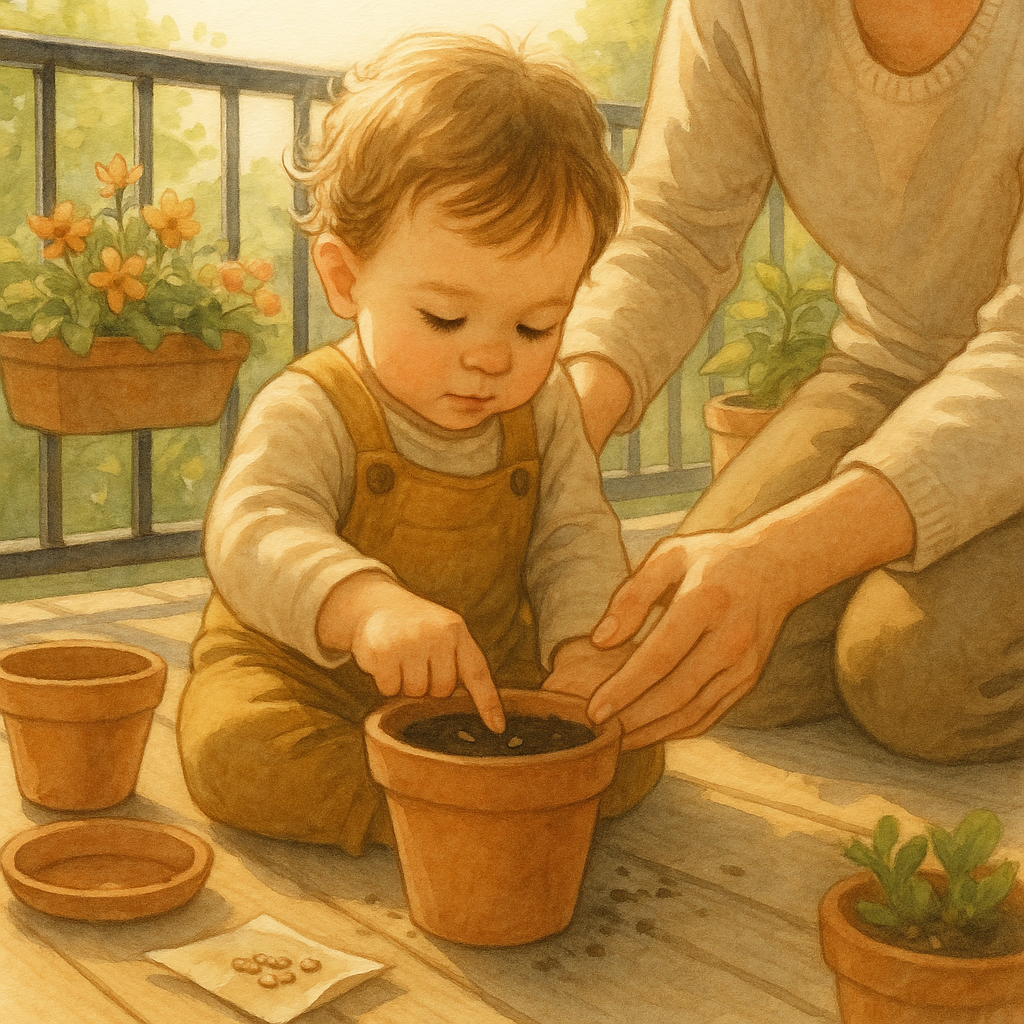
Every parent wants their child to love the natural world — but not every home has a garden. The good news is that a small balcony, or even a sunny windowsill, is all you really need. Spring, with its gentle warmth and longer days, is just about the perfect time to start sowing seeds. The moment your child presses that very first seed into the soil with their tiny fingers is one that both of you will remember for a long time to come.
## The Right Plants for Little Hands
Choosing fast-growing plants that deliver visible results quickly helps keep motivation high. Here are a few great options for children aged 0–5:
- **Basil:** Sprouts in 7–10 days, and its wonderful scent is pure magic for kids.
- **Mint:** Hardy and fast-growing — perfect for touching and smelling.
- **Peas:** Their climbing nature gives children a whole process to watch and follow.
- **Cherry tomatoes:** They take a little patience, but watching those fruits turn red is incredibly exciting.
- **Sunflowers:** Fast-growing, and their dramatic height never fails to amaze little ones.
Keeping track of when a plant needs water or how much sunshine it's getting can help children as young as 2 build a simple, satisfying daily routine.
## Ways to Get Involved at Every Age
**0–18 months:** Your little one is in observer mode — let them feel the texture of the soil and hold the watering can together. Sensory experience is what matters most at this stage.
**18 months – 3 years:** They can drop seeds into the pot and help hold the watering can. Simple, friendly prompts work best — something like, "Let's give the soil a little drink now."
**3–5 years:** They can keep track of which plant lives where, remind you when it's time to water, and even draw the seedlings. Keeping a little "garden journal" is something kids this age absolutely love.
## Your Practical Starter Checklist
Everything you need to get going without leaving the house:
- 1–2 pots with drainage holes (around 20 cm diameter is plenty)
- Ready-made peat or compost potting mix
- Your chosen seeds (easily found on supermarket shelves)
- A small watering can
- Optional: press-and-stick labels ("This is basil!" with a little picture)
Even letting your child pick out the pot together boosts their sense of ownership. A pot they've painted their favourite colour or covered in stickers becomes *their* pot — and that makes all the difference.
## The Unexpected Benefits
Gardening is about so much more than nature education. Research shows that children are far more willing to taste vegetables or herbs they've grown themselves — the "I grew this" effect really does work at the dinner table. On top of that, a regular watering routine creates a small morning responsibility ritual; a simple, consistent little task that genuinely supports the development of self-regulation skills.
Watching together on the day a seedling first pushes up through the soil teaches the concept of patience in a way no book ever quite could.
## A Small but Important Reminder
Some ornamental plants and flowers — such as geraniums and oleander — can be toxic to children. Always check the labels when making your choices, and if you're ever unsure, don't hesitate to contact a poison control helpline. Making sure children wash their hands before eating after playing in soil is all the precaution you really need.
So why not take the first step toward your little garden this weekend, with a handful of soil and a few seeds? You might just surprise yourself with how much you enjoy it too.
Foods mentioned in this post
⚕️ The content in this article is for informational purposes only; it is not medical advice. For decisions about your baby's health, consult your pediatrician.