
Sağlık · August 26, 2026 · 4 min read
Baby Teething: Gentle Ways to Ease the Discomfort
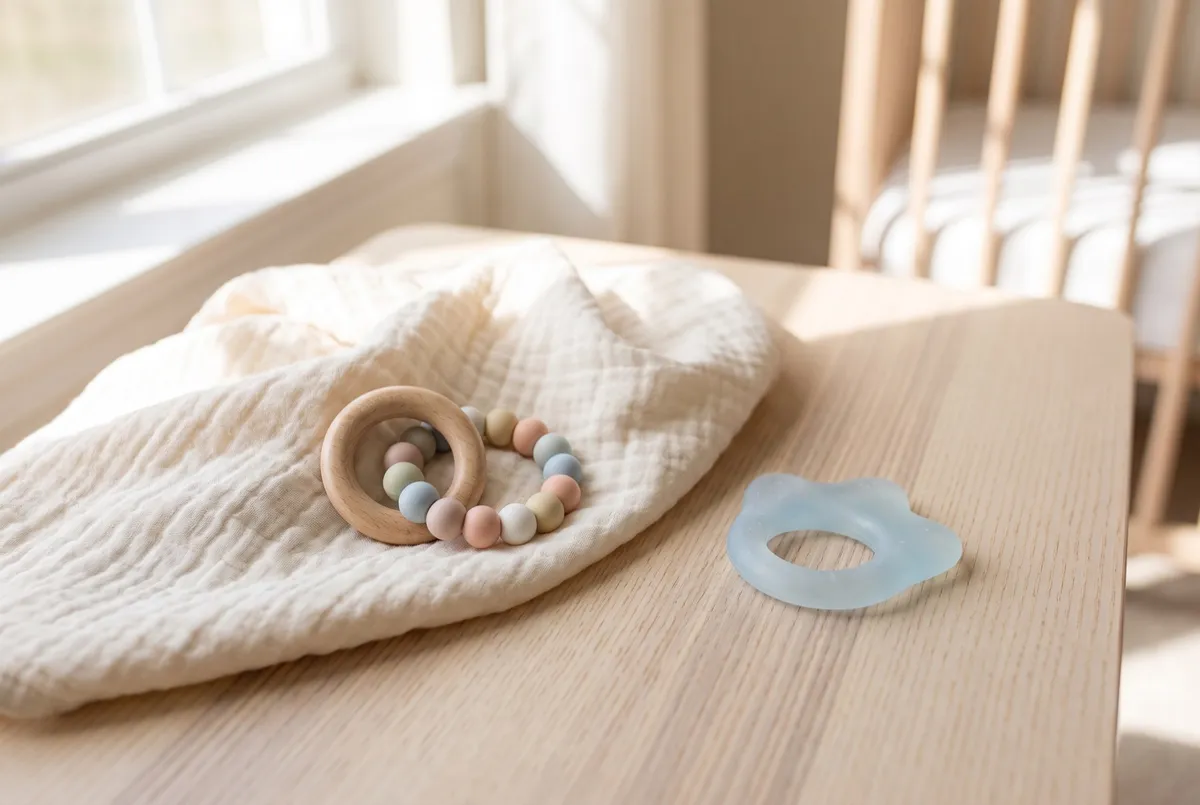
Extra drooling, wanting to bring everything to the mouth, and occasional fussiness — these familiar signs are often the heralds of teething. This natural process can sometimes leave your baby a little uneasy, but with a few calm, gentle approaches these days can pass more comfortably.
When Does Teething Start and What Happens?
The timing differs for every baby; in most, the first teeth appear around the sixth month, though earlier or later is perfectly ordinary too. During this period you may notice more drooling, a wish to chew on things, tender gums and occasional fussiness. One important point: teething on its own does not cause high fever, vomiting or diarrhea. If you see such symptoms, rather than attributing them to teething it's best to consult your pediatrician.
1. Offer a cool teething ring
A clean teething ring lightly chilled in the fridge (not frozen) can give tender gums a gentle coolness. Frozen, hard objects aren't recommended as they can hurt the gums; make sure the ring is a suitable size for your baby and clean.
2. Give a gentle massage with a clean finger
After washing your hands, gently massaging the gums in small circles with a clean finger soothes many babies. Watch your baby's response; if they don't like it, don't force it.
3. Offer a cool, clean cloth
A clean muslin cloth, dampened and lightly chilled, can be a safe option for a baby who wants to chew. Always keep them supervised, and make sure the cloth is intact and clean.
4. Offer extra calm and closeness
During this time your baby may want a little more holding than usual. A calm tone of voice, a familiar embrace and a patient approach are often the most effective comfort of all.
What to Avoid and When to Consult Your Pediatrician
Items worn around the neck, such as amber teething necklaces, aren't recommended because they carry a risk of choking and entanglement. Numbing teething gels or medicines should not be used without consulting your pediatrician. If your baby has a high fever, diarrhea, a marked refusal to feed, or distress that doesn't ease, rather than treating these as an ordinary part of teething, the safest course is to see your pediatrician.
❓ Does teething cause a fever?
Teething can lead to mild fussiness and a feeling of warmth in the gums, but on its own it does not cause a high fever. If your baby has a high fever, it's important to consult your pediatrician rather than attributing it to teething.
❓ Can I freeze the teething ring?
Freezing makes the ring too hard and can hurt tender gums. Chilling it lightly in the fridge is a gentler option instead; make sure it's clean before each use.
The Maiyko difference: During teething, extra drooling can keep your baby's skin damp. Soft bibs and clothing in GOTS-certified organic cotton help keep your little one's skin comfortable through the day with a gentle, breathable feel.
Health Note: This article is for informational purposes; please make decisions about your baby's health in consultation with your pediatrician.
maiyko.com · Kids & Babies · Health · İstanbul, Türkiye · © 2026 Maiyko
Foods mentioned in this post
⚕️ The content in this article is for informational purposes only; it is not medical advice. For decisions about your baby's health, consult your pediatrician.