
Sağlık · May 7, 2026 · 4 min read
Baby Skin in Spring: Sun, Wind, and Dry Air
## Spring Is Here — But Skin Is Still Vulnerable
It's warmer outside, the parks are filling up, and you've finally taken those first long walks with your baby. Wonderful! But in this season of change, one thing is easy to overlook: spring weather can actually be harder on baby and toddler skin than winter. Mornings are still cool, afternoon sun can be strong, and the wind can turn chilly without any warning. These swings in temperature and humidity can dry out, redden, and irritate little ones' delicate skin.
## Common Skin Concerns This Season
Here are the skin changes parents notice most often in spring:
- **Redness on the cheeks and around the nose:** Wind-exposed areas are the first to be affected — especially common in crawlers and toddlers.
- **Dry lips and cheeks:** As humidity levels shift, so does the skin's moisture. Small cracks can cause real discomfort.
- **Flaky scalp:** Signs of seborrheic dermatitis can flare up again in babies during the spring months.
- **Insect bites and contact reactions:** Those first long days at the park can bring small swellings from bug bites or contact with plants.
Most of these can be eased with everyday precautions — but if a rash is spreading, itching is getting worse, or a fever is present, **talk to your pediatrician**.
## Before You Head Outside: Small Steps That Make a Big Difference
A few simple habits can easily fit into your daily routine:
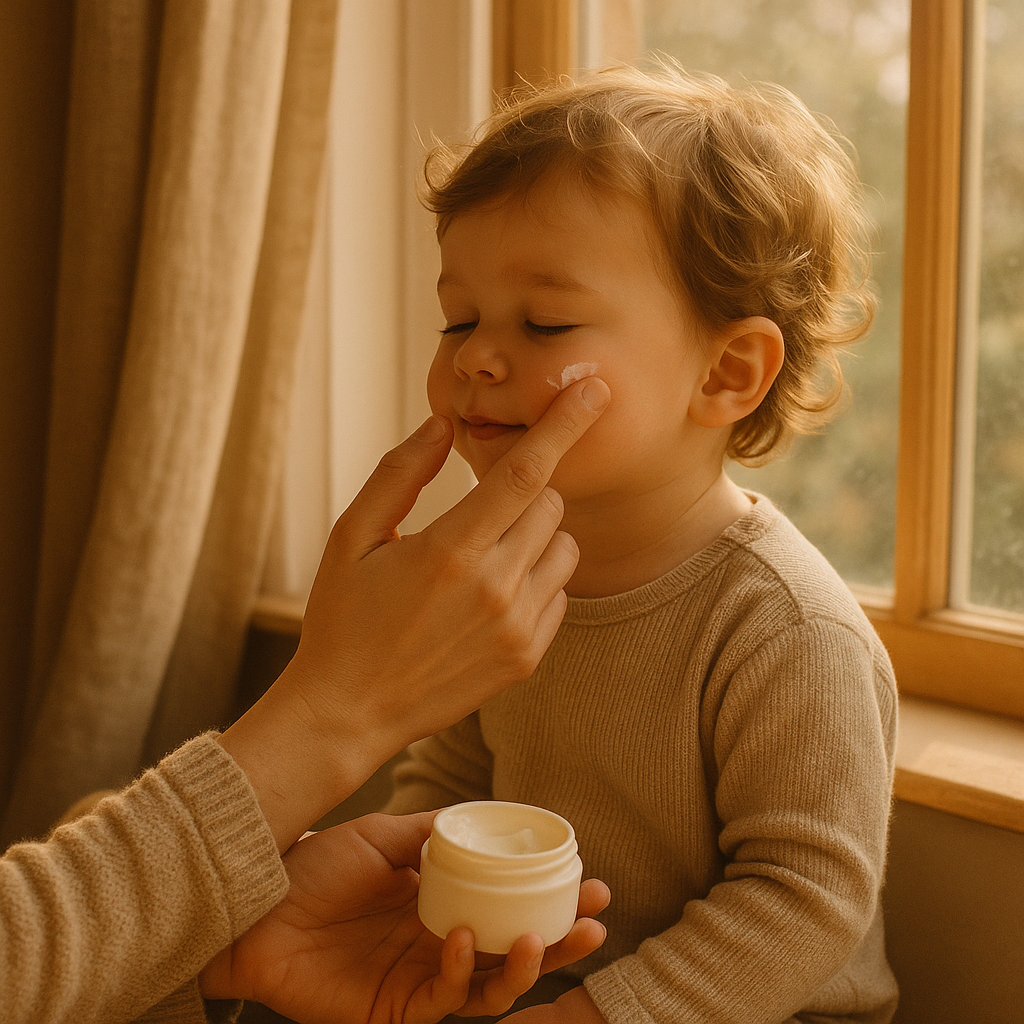
- **Apply moisturizer:** After bath time, while skin is still slightly damp, use a fragrance-free moisturizer suitable for babies. This helps lock in moisture.
- **Don't forget the lips:** A protective lip balm (beeswax-free and child-safe) can be used for babies over 6 months. For babies under 6 months, check with your pediatrician first.
- **Sun protection:** WHO guidelines recommend keeping babies under 6 months out of direct sunlight — clothing and shade come first. For children over 6 months, a broad-spectrum, child-appropriate sunscreen of SPF 30 or higher can be used. Apply it to exposed skin 15–20 minutes before heading out.
- **Dress in light layers:** Clothes that feel right in the cool morning air can become too warm by midday. Adding a thin, easy-to-remove extra layer helps prevent the skin from overheating — and then getting cold again.
## When You Get Home
After a trip to the park, gently wipe your child's face with warm water — no need for a vigorous wash. If your little one had plenty of contact with grass, flowers, or sand, a short, lukewarm bath can do wonders for their skin. You can add a product containing oatmeal extract to the bath water, which may help soothe skin that's been sensitized by the outdoors.
A little observation goes a long way too: make a mental note of which days and which parks seem to be followed by skin changes. If you spot a pattern linked to a particular plant or surface, that information can be really useful to share at your next pediatrician visit.
## A Friendly Reminder
Every child's skin is different. A product that one baby tolerates perfectly may irritate another. The suggestions in this post are intended for general informational purposes only. If a skin concern persists or you're unsure about anything, your child's doctor is always the best person to guide you. Spring is a beautiful season — and with a little care, you and your baby can enjoy every moment of it.
Foods mentioned in this post
⚕️ The content in this article is for informational purposes only; it is not medical advice. For decisions about your baby's health, consult your pediatrician.