
Beslenme · May 17, 2026 · 4 min read
Add a Pop of Color to Your Child's Plate This Spring: Seasonal Vegetables
## Spring on the Table
These days, as market stalls burst into color, reaching into a basket for those bright green peas or tiny carrots is a joy in itself. But the real question is: how do we bring this season's bounty to the plate of a young child between 0 and 5 years old — in a way that's both nourishing and actually eaten?
Spring vegetables are especially valuable for this age group. Peas and fresh green beans are rich in fiber, while dark leafy greens offer iron and folate. Carrots are one of the season's standout sources of beta-carotene, a precursor to vitamin A. And because of their naturally soft texture, these vegetables are among the easiest foods to cook and purée.
## Practical Ideas by Age
**6–9 months:** Steam peas or carrots until soft, then blend with a small drizzle of olive oil. Single-ingredient starts make it easier to track potential allergies and help your baby discover each flavor on its own.
**9–12 months:** Well-cooked broccoli or zucchini cut into finger-sized pieces make a wonderful finger food. They support fine motor development while encouraging independent eating habits.
**1–3 years:** Rather than hiding vegetables at this stage, making them visible helps build healthier long-term habits. A colorful vegetable soup, a spinach pasta sauce, or carrot-packed meatballs are as pleasing to the eye as they are to the palate.
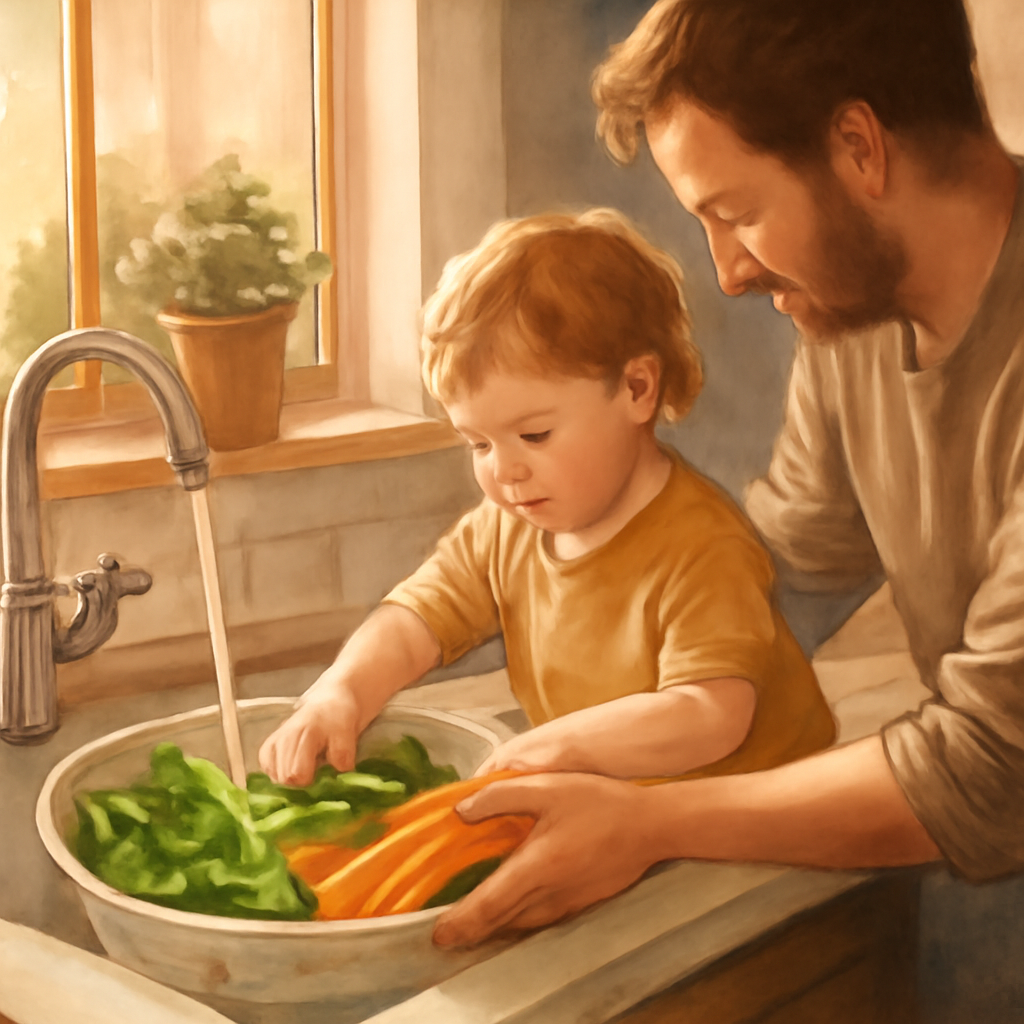
**3–5 years:** Bring your child into the shopping or prep process. A simple task like popping peas out of their pods gives them a sense of ownership over the meal — and can make them much more willing to sit down and eat it.
## Small but Important Reminders
- Raw vegetables can pose a choking risk for children under 3; always pay close attention to how you prepare them.
- If your child refuses a new vegetable, patiently offer it again in 10–15 different presentations without any pressure or judgment — research shows a strong link between repeated exposure and acceptance.
- Do not add salt or strong spices to food for babies under 1 year old.
- If your child has any food allergies or specific dietary needs, always consult your pediatrician.
## A Final Thought: Good Enough Is Perfectly Fine
You don't need to put an organic, colorful, perfectly balanced plate on the table every single day. Tossing leftover peas into a soup before heading to the park, stirring a handful of chopped spinach into lunchtime pasta, or setting a few raw carrot sticks alongside dinner — each of these is a small but meaningful step. Spring doesn't last forever; bring a little of its goodness to your table, and let your child take it from there.
Foods mentioned in this post
⚕️ The content in this article is for informational purposes only; it is not medical advice. For decisions about your baby's health, consult your pediatrician.