
Beslenme · May 8, 2026 · 4 min read
Spring Thirst Sneaks Up Quietly: A Hydration Guide for Ages 0–5
## Why Children Say 'I'm Not Thirsty'
Adults notice thirst right away and reach for a drink. But for children between 0 and 5 years old, that signal often arrives too late — or not at all. Babies show dehydration through crying, fussiness, or fewer wet diapers. A 2- or 3-year-old can run around for hours in the middle of play without ever noticing they're thirsty. That's exactly why drinking water isn't something children can be left to manage on their own — it's a rhythm you build for them.
Spring makes this even more important. As the days grow longer, time at the park stretches out, little ones run more and sweat more. But because the weather hasn't reached full summer heat yet, that thirsty feeling can stay in the background — even for adults.
## Daily Fluid Needs by Age (General Guide)
The figures below are intended as a general reference only; please consult your pediatrician for guidance specific to your child:
- **0–6 months:** Breast milk or formula is sufficient; no additional water is needed
- **6–12 months:** As solid foods are introduced, small amounts of water — around 60–120 ml per day — can be offered
- **1–3 years:** Approximately 1–1.3 litres of total fluid per day (including fluids from food)
- **4–5 years:** Approximately 1.2–1.6 litres of total fluid per day
Foods like fruit, vegetables, soup, and milk all contribute to that total. So if you're worried your child isn't drinking enough water, take a look at their plate — if there are strawberries, cucumber, or yogurt on it, they're already taking in fluids.
## 5 Practical Ways to Make Hydration Part of the Routine
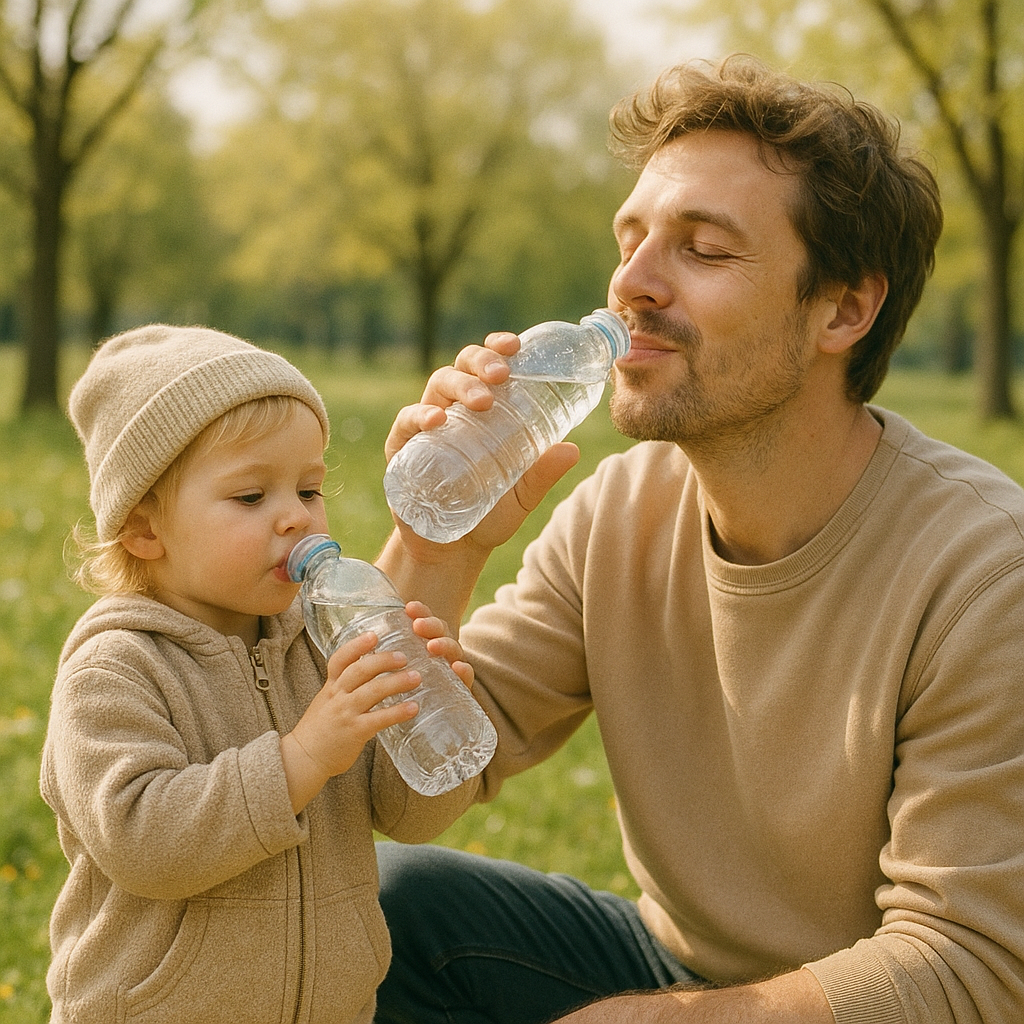
- **Drink together:** When you pick up your glass, hand your child theirs too. The approach of 'I'm having a drink — take a sip with me' works far better than a direct instruction.
- **A pit stop when leaving the park:** Making a water break a habit right before heading outside or as soon as you get home can go a long way.
- **A cup they can see, at a height they can reach:** Children 18 months and older will sometimes walk over and help themselves when they spot their own cup.
- **Water lightly flavoured with fruit:** Dropping a few slices of strawberry or plum into a jug can make water more appealing with a touch of colour and a gentle hint of flavour. No need to add sugar, juice, or honey.
- **A cup they love, not just any cup:** The right cup makes a real difference for a small child. A handled cup, a lidded one, or simply a colourful cup they chose themselves can encourage them to drink more willingly.
## Signs of Dehydration to Watch For
The following symptoms may indicate your child isn't getting enough fluids. If you notice any of them, don't wait — seek advice from a healthcare professional:
- Noticeably dark urine, or a dry diaper or no toilet visit for more than 6–8 hours
- Dry lips or reduced tears when crying
- Unusual fatigue or lack of energy
- A sunken fontanelle in babies
## Make the Season's Fruit Your Ally
Strawberries and plums are among spring's most vibrant gifts. Both have a high water content — strawberries are around 90% water — and quietly contribute to your child's fluid intake throughout the day. Served as a purée, cut into small pieces, or mixed into yogurt, they make a nourishing and refreshing addition to any meal.
Remember: drinking water isn't a chore — it's a habit. And like every habit, it's best learned when you lead by example.
⚕️ The content in this article is for informational purposes only; it is not medical advice. For decisions about your baby's health, consult your pediatrician.