
Oyun & Eğlence · May 9, 2026 · 4 min read
Spring Shadow Play: Discover the World with Sunlight
## A Little Light, A Great Big World
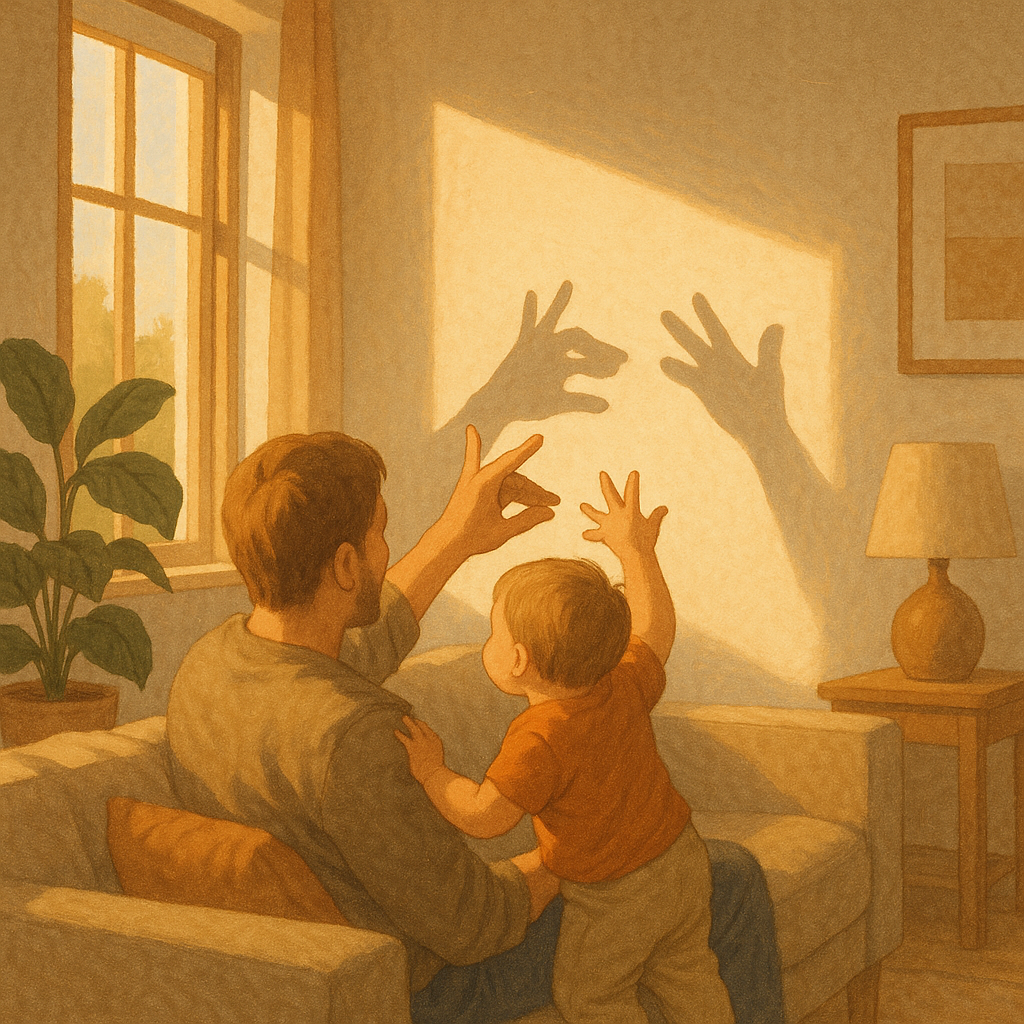
As spring afternoons stretch longer, strange and playful shapes begin to dance across your walls. If your child is reaching out to touch those shadows, chasing something they can never quite catch — they're living a **completely conscious learning experience**. Shadow play doesn't require expensive toys, a special space, or any preparation. All you need is a little light and a little curiosity.
## Why Shadow Play?
Playing with shadows looks simple on the surface, but it's a developmentally rich activity:
- **Cause-and-effect thinking:** If I lift my hand, the shadow lifts too — this simple discovery creates powerful connections in the brain of a 1–2 year old.
- **Spatial awareness:** Watching a shadow shrink and grow makes the concept of near and far feel real and tangible.
- **Language development:** Spontaneous conversations like *Look, it's a bunny! Now it's a dog!* expand vocabulary naturally.
- **Imagination and storytelling:** For children aged 3–5, shadow play can evolve into shadow theatre — they start telling their very own stories.
## How to Play at Each Age
**0–12 months:** Hold your baby in your lap and slowly move your hands in a patch of sunlight on the wall. Their eyes following the shadow help build visual tracking skills. Narrate as you go: *Look, the hand is going away — and now it's coming back!*
**1–2 years:** Sit on the floor, shine a flashlight at the wall, and make simple shapes with your hands. Your child will watch at first, then want to put their own hand in front of the light — and that's exactly the moment you're waiting for!
**2–4 years:** Bring in different objects: a toy car, a flower, small figurines. Ask your child to guess what each shadow will look like. The question *What do you think this one will be?* supports both language skills and the ability to predict and hypothesize.
**4–5 years:** Hang a white sheet over a doorway, place a lamp behind it, and set up your very own mini theatre. Ask your child to come up with a story, then bring their characters to life yourself — or swap roles and let them take the stage.
## A Special Spring Touch: Shadow Play Outdoors
When you head to the park or step out onto the balcony, pay attention to where the sun is sitting in the sky. In the early morning and late afternoon, shadows grow long and dramatic, creating the most striking shapes. Watching your child discover their own shadow — trying to stomp on it, trying to run away from it — is pure joy, and it quietly supports body awareness at the same time.
**A little tip:** Use sidewalk chalk to trace your child's shadow on the ground, then come back to the same spot later and see — did the shadow escape? Did it grow? This simple experiment makes the movement of the sun and the passage of time wonderfully concrete.
## An Afternoon Without Screens
Shadow play is one of the loveliest alternatives to screen time, precisely because it calls for a parent's active involvement too. In those moments when you laugh together and wonder together, your child isn't just playing — they're learning **what it feels like to simply be with you**. And that's something no app can ever give them.
Foods mentioned in this post
⚕️ The content in this article is for informational purposes only; it is not medical advice. For decisions about your baby's health, consult your pediatrician.