
Sağlık & Spor · May 5, 2026 · 4 min read
Spring Into Motion: Outdoor Exercise for Ages 0–5
## Why Right Now?
May mornings feel like something else entirely. The sun rises early, the air is neither too cold nor too warm — it's almost perfect conditions for little ones to get moving. The World Health Organization (WHO) recommends that children aged 3–4 get at least 180 minutes of physical activity per day, a significant portion of which should be moderate- to vigorous-intensity movement. For children aged 5 and older, at least 60 minutes of that time should be energetic physical activity. But don't think of it as "exercise" at all. For little ones, movement simply means play.
## What Can You Do by Age?
**0–12 Months: Feeling the Ground and Soaking Up the Day**
When you take your baby to the park, lay a blanket down and give them a short bout of tummy time. Even just feeling the difference between grass, sand, and a flat surface is a rich sensory experience at this age. Avoid direct sun exposure — stick to shaded spots and keep outdoor time to around 10–15 minutes.
**1–2 Years: The Walking Adventure**
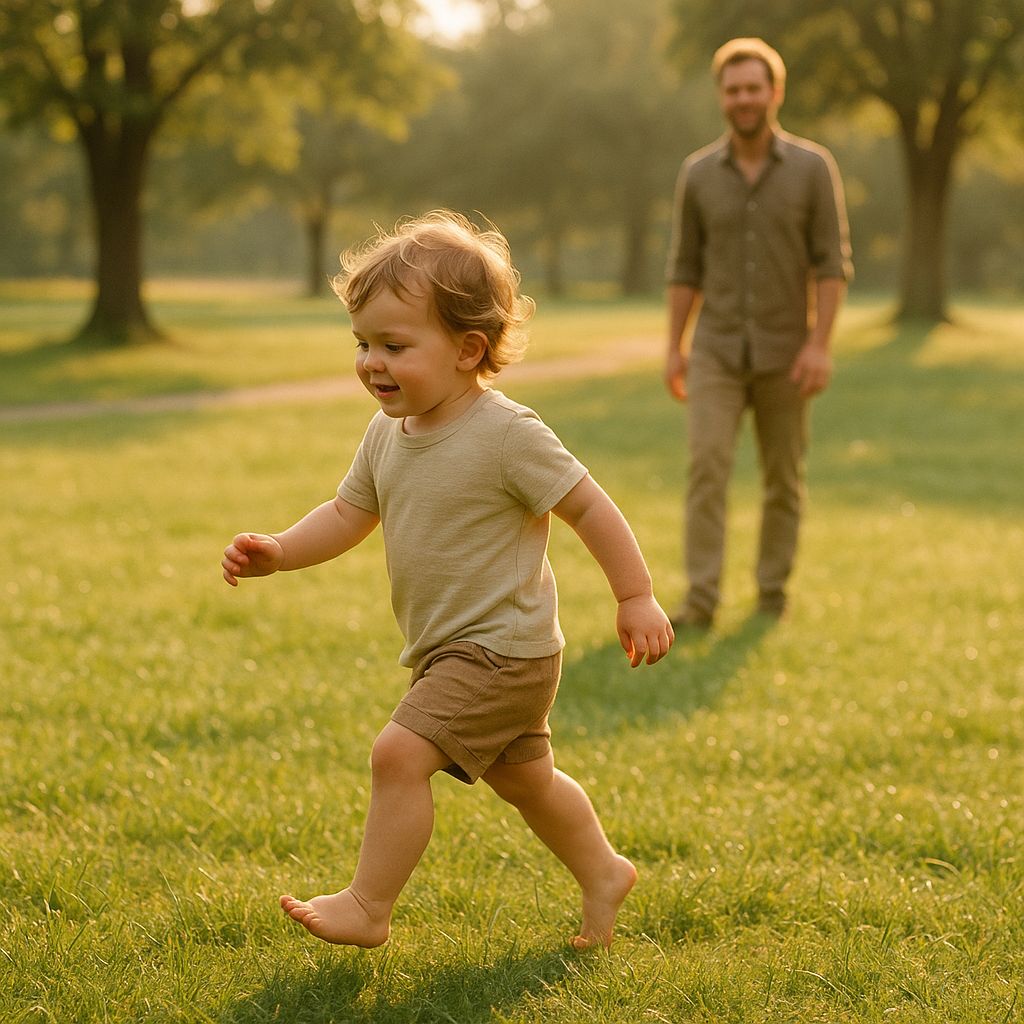
For newly walking toddlers, even a simple path is a grand expedition. Let them explore at their own unhurried pace. Collecting leaves, counting pebbles, walking the full length of a fence — all of these support both motor development and cognitive stimulation. Walk alongside them rather than holding their hand the whole time; let them move forward out of curiosity, not fear of falling.
**2–3 Years: Balls, Chalk, and Short Sprints**
Large muscle groups develop rapidly at this age. Gently kicking a ball, slowly climbing steps, trying to walk along a taped line — these are all wonderful activities. Drawing lines on the pavement with chalk and giving simple commands like "jump, step over, stop" works on language and body coordination at the same time.
**3–5 Years: Games with Rules**
They're ready for group play now. Games like freeze tag played with a parent, simple obstacle courses, or races to see "who can reach the tree first" support both social and physical development. Put participation before competition — instead of "You ran so fast, well done!" try "We played together and I had so much fun."
## Things to Keep in Mind
- **Hydration**: Small bodies lose water much more quickly than adult bodies do. Give them a drink before heading to the park and always bring a water bottle along.
- **Clothing**: The cool morning air can be deceiving. A layering system is ideal — clothes can be removed as they warm up with movement.
- **Sun protection**: The Turkish Ministry of Health recommends SPF 30 or higher sunscreen for children over 6 months. Apply it 15–20 minutes before you head out.
- **Surface safety**: Check playground equipment before your child starts playing — if anything looks rusted or broken, steer clear of that piece.
## A Final Thought
Movement isn't a checklist for little ones — it's the most natural way they explore the world. With you by their side, that morning trip to the park becomes a full-on adventure. If your child has a chronic condition or you have any developmental concerns, be sure to discuss any activity plans with your pediatrician — every child has their own rhythm, and the best guide is the professional who knows them.
⚕️ The content in this article is for informational purposes only; it is not medical advice. For decisions about your baby's health, consult your pediatrician.