
Gelişim · May 10, 2026 · 4 min read
Spring Fine Motor Skills: Big Jobs for Little Fingers
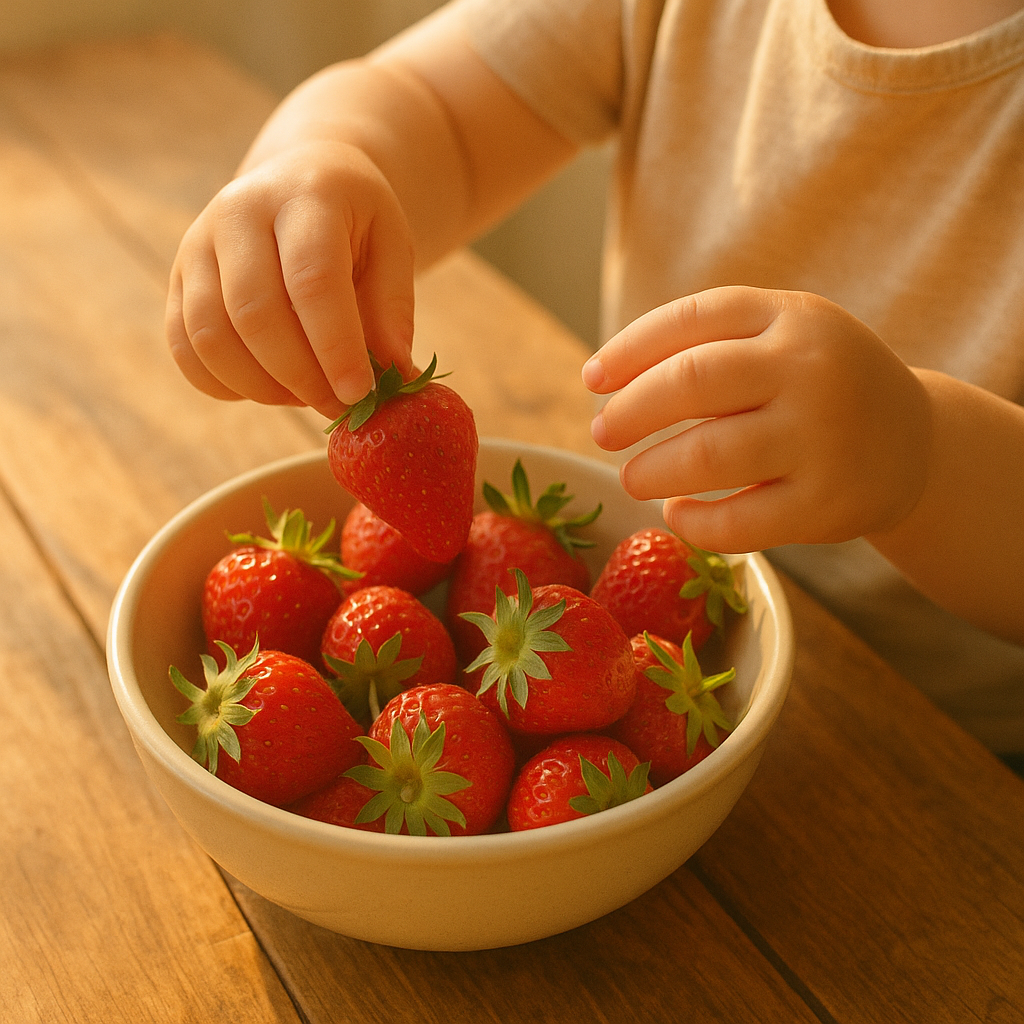
## Little Hands, Big Work
On the first warm days of spring, your child might be trying to carry rocks at the park, eager to fill a balcony pot with soil, or reaching for a bowl of strawberries only to drop one and try again. These little 'failures' are actually the moments when the brain is working its hardest. Eye-hand coordination, strengthening the finger muscles, and learning to hold objects with control — all of this falls under **fine motor development**, and it advances at a remarkable pace between the ages of 0 and 5.
## What to Expect at Each Age
Every child moves at their own pace, but knowing the general picture can both reassure you and help guide you:
- **0–6 months:** Clenches hands into fists and begins reaching toward a dangling toy.
- **6–12 months:** Holds objects with both hands, transfers them from one hand to the other, and discovers pointing with the index finger.
- **1–2 years:** Grips a spoon (spills, but doesn't give up!), turns book pages, and makes marks with a crayon.
- **2–3 years:** Tries to undo buttons, stacks small objects, and is introduced to scissors.
- **3–5 years:** Uses scissors, draws simple shapes, and attempts to get dressed independently.
It's perfectly normal for these milestones to happen a few weeks earlier or later. However, if you notice a pattern that looks significantly different from the typical range for your child's age group, **don't hesitate to speak with your pediatrician.**
## Spring: A Natural Playground for Development
The season itself offers a ready-made setting for fine motor growth. Your child:
- Practices their **pinch grasp** by picking seasonal fruits like **strawberries** or **plums** one by one from a bowl.
- Works all the muscles of the hand by shaping sand or wet soil.
- Lines up tiny pebbles in a row, counts flower petals — and without even realizing it, builds their concentration too.
So next time you're at the park watching that 'messy' play, you might see it in a whole new light.
## 5 Simple Activities to Try at Home
- **Strawberry transfer:** Place strawberries in one bowl and ask your child to move them one by one into another. Simple, but surprisingly effective.
- **Sponge squeezing:** Squeezing a wet sponge in the bath is a wonderful way to strengthen hand muscles.
- **Tape peeling:** Stick pieces of tape onto paper and ask your child to peel them off — great for building fingertip sensitivity.
- **Button board:** Sew an old shirt onto a wooden frame and you've got a ready-made tool for practicing buttons and buttonholes.
- **Dough kneading:** Salt dough (flour + salt + water) is cheap and safe — kneading, tearing, and rolling are all fine motor exercises in disguise.
## Now Is the Perfect Time to Say 'Let Them Do It'
As a parent, one of the hardest things to do is wait patiently while your child struggles with a task — yet that patience is one of the most powerful things you can do to support their development. Taking the spoon from their hand or putting their coat on for them might make them happy in the moment, but it takes away the chance to learn. The message 'You can do it, and I'm right here' is the most valuable reassurance you can offer.
This spring, give those little fingers the big opportunities they deserve — let them carry rocks, gather fruit, and knead dough. Every skill grows slowly and steadily in those tiny hands.
Foods mentioned in this post
⚕️ The content in this article is for informational purposes only; it is not medical advice. For decisions about your baby's health, consult your pediatrician.