
Oyun & Eğlence · May 19, 2026 · 4 min read
Spring Clay & Playdough Play: Big Discoveries for Little Hands
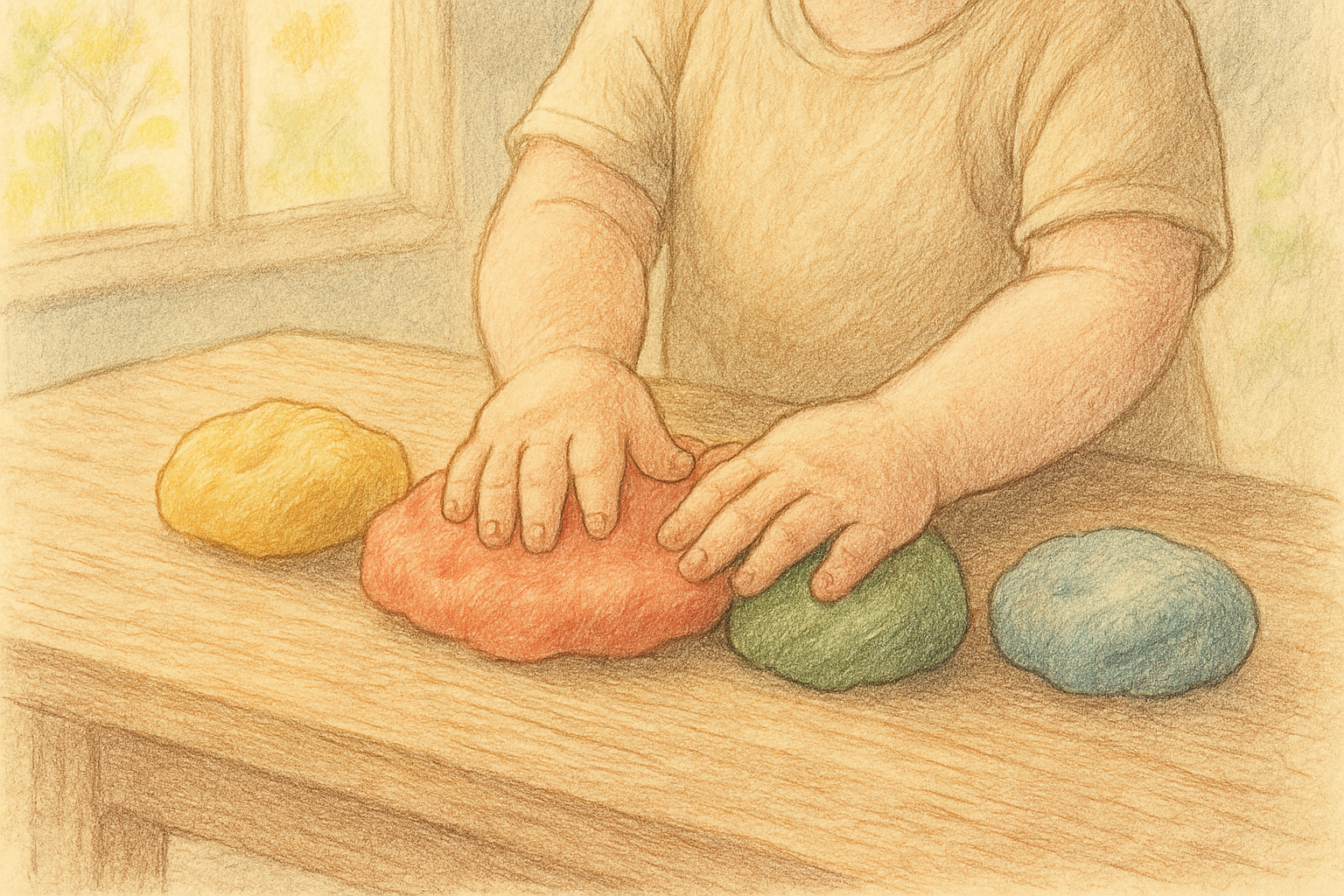
On a spring evening, your little one's tiny hands sink into soft dough, eyes sparkling with curiosity. No screens, no noise — just the two of you, right in the middle of that moment. Clay and playdough may look like a "simple" activity on the surface, but they actually offer an incredibly rich developmental space for young minds.
Why Clay and Playdough?
As children knead, press, and roll, they strengthen both their fingers and their wrist muscles. These movements lay the groundwork for skills like holding a pencil and using scissors in the years ahead. On top of that, the varied texture, temperature, and scent of the dough contributes to healthy sensory development. According to the American Academy of Pediatrics (AAP), sensory play also helps children regulate their stress response.
Activity Ideas by Age
18 months – 2 years: Simply squishing and pressing finger marks into the dough is plenty. Roll small balls together and say "big ball – little ball" to support language development. Always use playdough under supervision.
2 – 3 years: Introduce molds and simple tools (a plastic knife, a rolling pin). Go with a spring theme and make strawberry or plum shapes — bring the season to life through dough!
3 – 5 years: Play through storytelling. Scenarios like "We're gardeners and we're building a vegetable garden out of this dough" enrich both language and social-emotional skills. Combine different colors of dough to teach colors and observe how they blend together.
How to Make Safe Playdough at Home
With 2 cups of flour, ½ cup of salt, 2 tablespoons of vegetable oil, and enough warm water, you can whip up additive-free playdough in just a few minutes. Use natural food coloring or beet and spinach juice to add color. It keeps in the refrigerator for up to 1 week. Since it contains salt, make sure young children don't put it in their mouths, and always keep play supervised.
⚕️ The content in this article is for informational purposes only; it is not medical advice. For decisions about your baby's health, consult your pediatrician.