
Yemek Tarifleri · May 28, 2026 · 4 min read
Spring Breakfasts: Quality Time in the Kitchen with Your Child
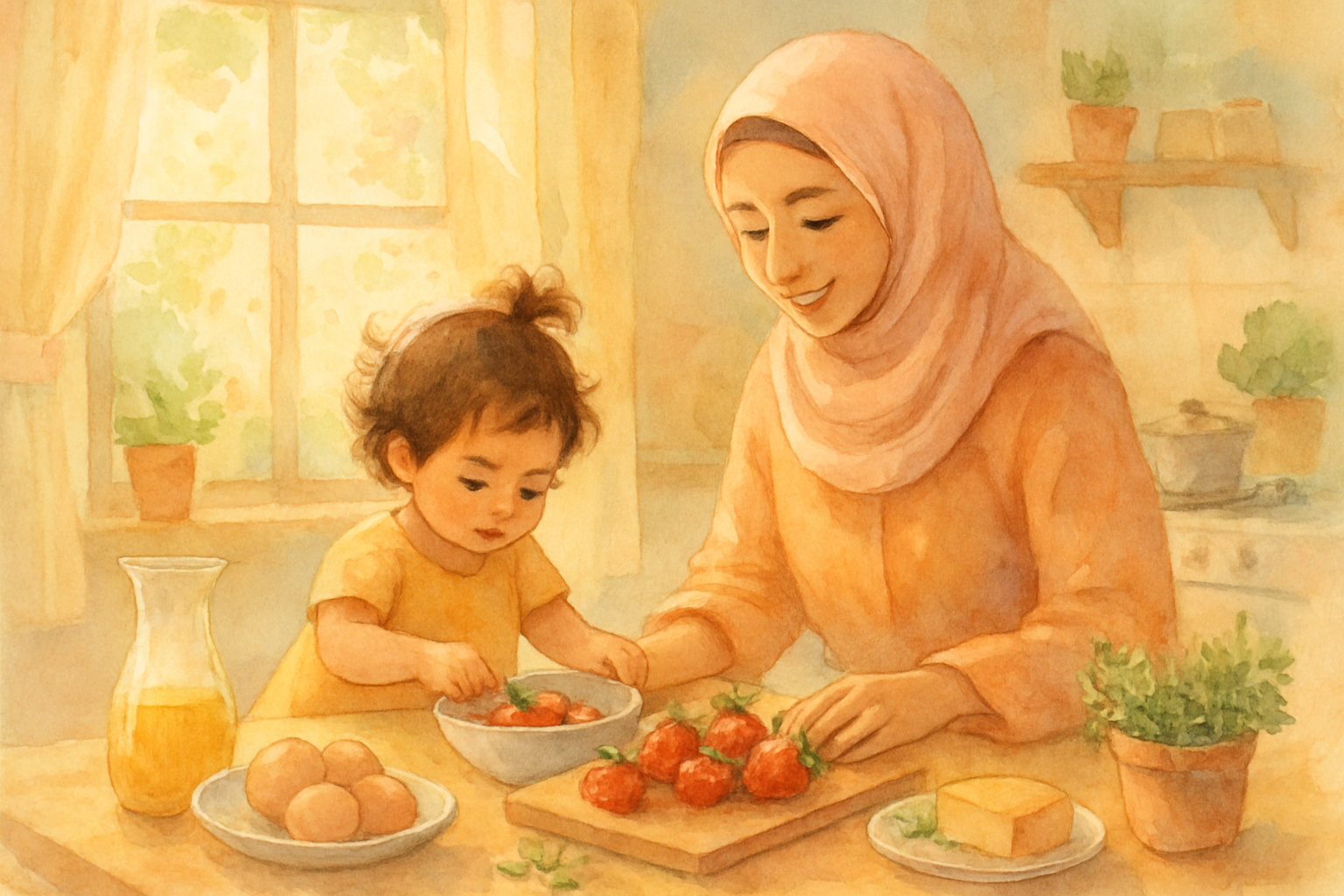
Spring mornings at home feel different. The breeze coming through open windows, the sound of birds in the garden, and your child slowly waking up—these moments are among the most precious in your parenting journey. The breakfast table is the perfect place to share these moments. Simple recipes, your child's participation, and time spent together matter just as much as the nutrition itself.
Why Breakfast Matters
After fasting overnight, your brain and muscles get their first energy from breakfast. For children, this is even more critical: a balanced breakfast increases concentration, makes learning easier, and supports emotional balance. Spring brings new fruits (strawberries, plums) and vegetables (chard, spinach, fresh onions)—it would be a shame not to use nature's generosity at your table.
Strawberry Yogurt Bowl (12+ months)
Ingredients: Room temperature yogurt (1 bowl), fresh strawberries (3-4), wheat germ or granola (1 tablespoon), honey (optional, 18+ months).
Preparation: Cut strawberries into quarters or halves—they should be a size your child can hold. Pour yogurt into a bowl, place strawberries on top, and mix with the wheat germ. As your child stirs with a spoon, they'll observe colors mixing and textures changing. This is both nutrition and a chemistry lesson. Older children (3+ years) may want to cut the strawberries themselves—offer a safe experience with a plastic knife.
Fresh Chard Omelet (18+ months)
Ingredients: Eggs (1-2), fresh chard leaves (a handful), butter (½ teaspoon), salt and pepper (small amounts).
Preparation: Wash the chard leaves and chop finely. Beat the eggs gently—your child can help with this, but adults should supervise. Pour butter into a hot pan, sauté the chard for 30 seconds, then add the eggs. Cook on medium heat for 2-3 minutes. The omelet is a source of protein and iron, and the vitamin K in chard supports bone health. Once cooled, your child can eat it piece by piece.
My child doesn't like eggs at all—what can I do?
Egg flavor is strong, and some children may reject it initially. Taste buds need 15-20 exposures to develop a preference. Mix eggs with other favorite foods (cheese, vegetables, bread). Don't force it—patience and repetition support taste development over time.
Plum Semolina Halva (10+ months)
Ingredients: Semolina (2 tablespoons), milk (1 cup), fresh plum (2), butter (1 teaspoon), salt (a pinch).
Preparation: Cut the plum into quarters. While heating the milk, pour semolina and butter into a pan and toast for 2 minutes (this opens the semolina's nutrients). Slowly pour the hot milk while stirring—prevent lumps from forming. Add the plum pieces and cook for 5 minutes. Semolina is rich in B vitamins and magnesium; plums support digestive health. In spring, this combination helps ease the effects of seasonal transition on your digestive system.
The Maiyko difference: Breakfast is more than nutrition—the time you spend together with your child reinforces their sense of worth. Giving your child the right to "help" in the kitchen develops their sense of independence and shapes their relationship with food positively.
Health Note: When introducing new foods, add each new food with 3-5 days in between and watch for signs of allergic reaction. If you have any concerns, consult your pediatrician.
Tips for Spending Quality Time Together in the Kitchen
Give your child age-appropriate tasks: children 12-18 months can stir, 2-3 years can break and place items, and 3+ years can measure and do simple cutting. Speed doesn't matter—participation does. Even if they make a mistake, their experience and confidence matter more. The conversations at the breakfast table also support language development—name the colors, textures, and tastes.
Foods mentioned in this post
⚕️ The content in this article is for informational purposes only; it is not medical advice. For decisions about your baby's health, consult your pediatrician.