
Ev & Hobiler · May 23, 2026 · 5 min read
Nature Collecting with Your Child This Spring: Art with Leaves, Stones, and Flowers
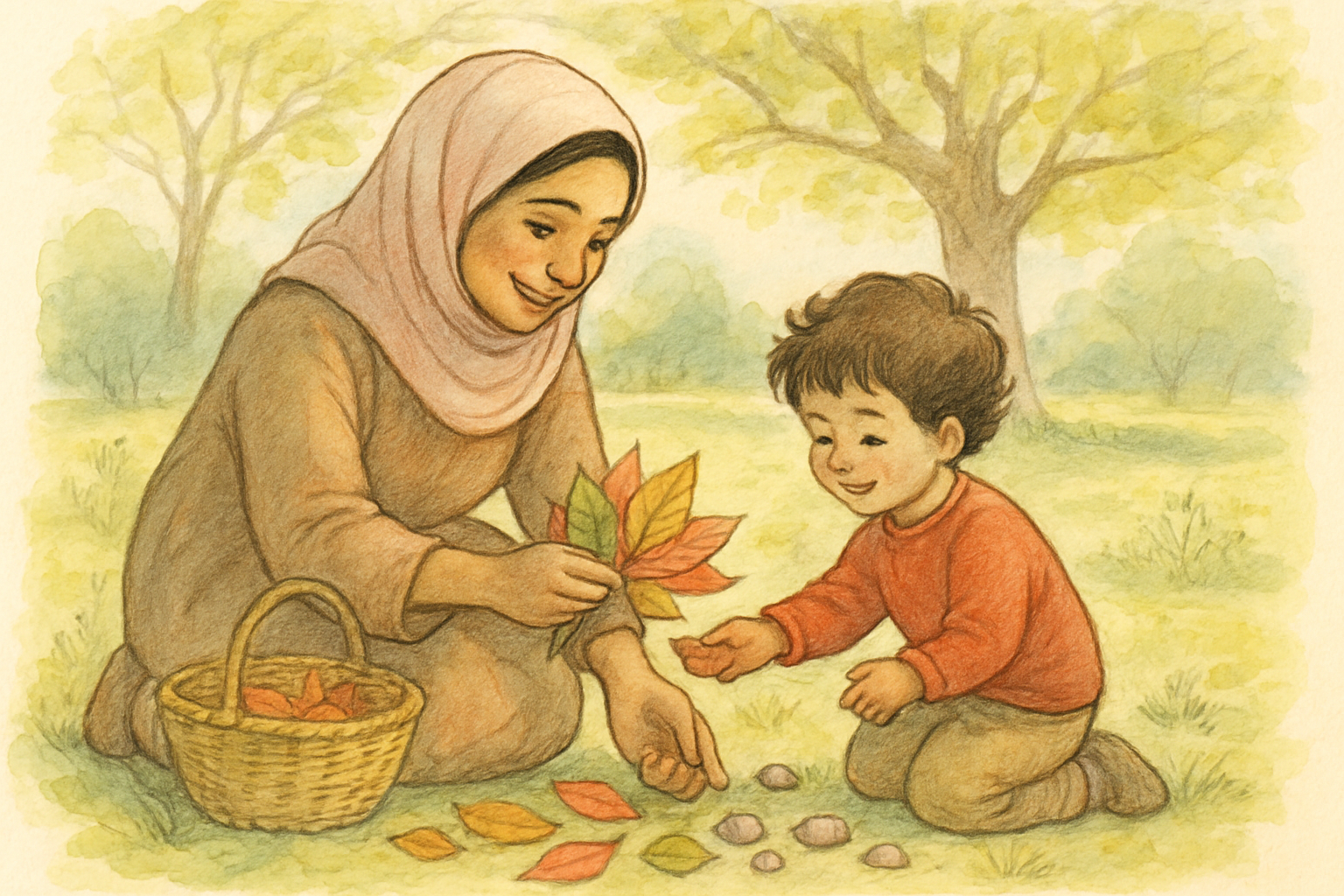
On the first warm spring days, toss a bucket and a few empty jars into your bag before heading to the park. Because nature offers the richest creative workshop in the world — completely free — for children aged 0–5: fallen leaves, rough-textured stones, dried flowers, and colorful pinecones. In this post, we're sharing fun, development-friendly ways to collect natural materials with your child and turn them into simple art projects at home.
*Source: International Child Development Research Review, 2024
Why Collect from Nature? The Developmental Benefits
As children handle natural materials, they unknowingly exercise their finger muscles, color and shape perception, and sorting skills — all key parts of fine motor development. Questions like "Why is this leaf yellow and that one green?" spark natural curiosity and a love of learning. And when they create art from the things they've gathered and brought home, it gives them a powerful sense of accomplishment and a real boost to their confidence. Best of all: none of this costs a thing.
Safe Collecting: What to Watch Out For
Safety first! Especially for children under 2, make sure anything you collect is large enough not to be swallowed (at least 3 cm). Avoid picking up mushrooms, insect-infested branches, or any unknown berries or seeds. After the activity, turn handwashing into part of the fun — something like "let's rescue our hands from the mud!" works a treat. Rinsing stones and letting them dry in the sun before use is a simple habit that's both hygienic and practical.
Health Note: This article is intended for informational purposes only. If your child puts a collected material in their mouth or you notice any allergic reaction, please contact your pediatrician or your local health helpline. Always consult your doctor before making any health-related decisions.
3 Easy Activities: What Can You Make with Your Collection?
⚕️ The content in this article is for informational purposes only; it is not medical advice. For decisions about your baby's health, consult your pediatrician.