
Kitaplar · May 16, 2026 · 4 min read
How to Set Up a Book Nook? A Step-by-Step Guide for Ages 0–5
## A Love of Books Starts with a Corner
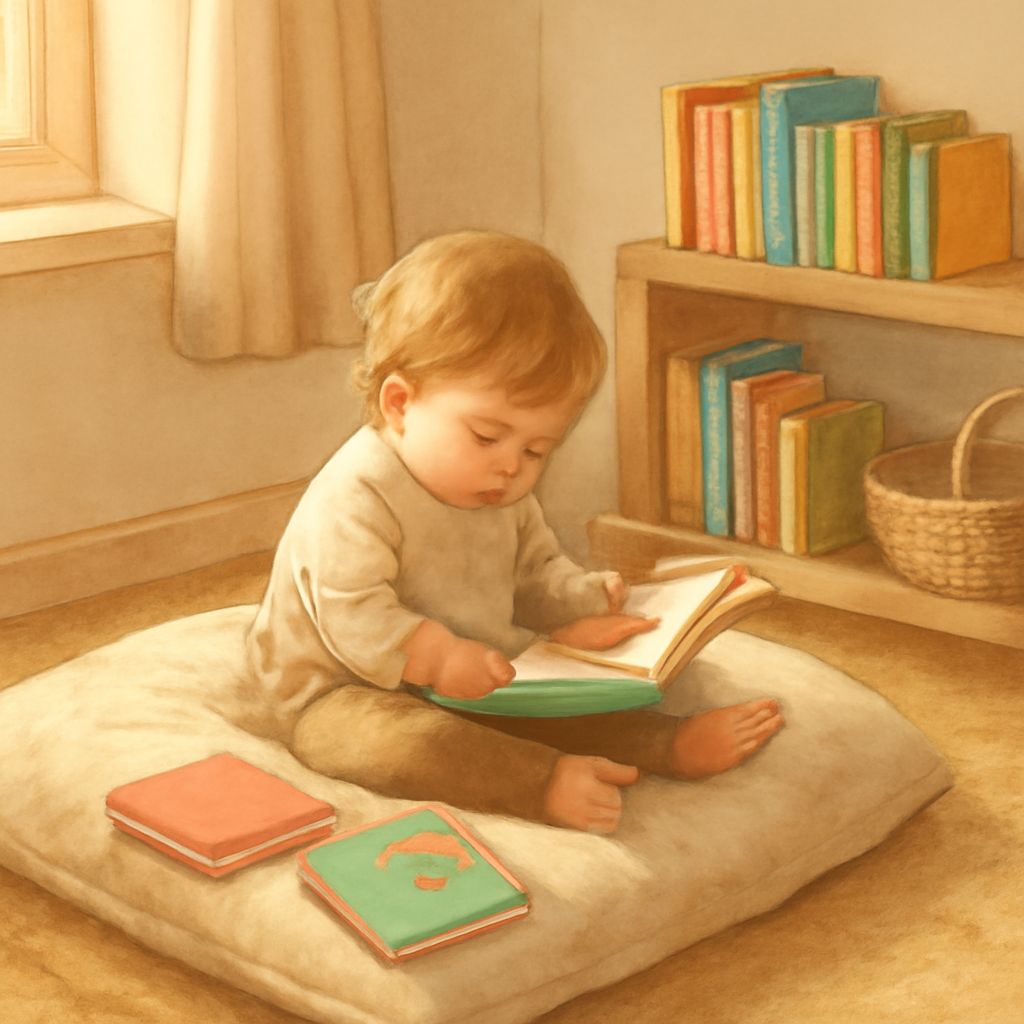
Children first get to know books as objects: they touch them, smell them, and turn the pages. Then they look at the pictures inside. And finally — a process that can take months — they start listening to the story. To get that journey started, all you need is a **reachable, inviting, and cozy** little book nook somewhere in your home.
The soft light that streams in through the window in spring makes it the perfect time to set one up. Your child can sit for a little longer now, curiosity is at its peak, and even a ten-minute "book time" before heading to the park on a nice day can make a world of difference.
## What to Keep in Mind When Setting Up Your Nook
- **Height:** Place books at your child's eye level or just below. Forward-facing, open shelves — or even just a simple basket — work best.
- **Floor comfort:** A thin cushion, a small rug, or a folded blanket is all you need. The important thing is that your child wants to sit there; no expensive furniture required.
- **Light:** Try to stay close to natural light, but avoid direct sunlight — it can fade book covers. A gently shaded corner is ideal.
- **Number of books:** Keep it small but accessible. Five to eight books is plenty; swap two or three of them out every few weeks. Too many choices can feel overwhelming for little ones.
- **Your child's input:** Children over 2 love to "decide" where each book belongs. That small sense of responsibility helps them feel ownership over the space.
## Which Books Are Right for This Age?
**0–12 months:** Board books made from sturdy cardboard, featuring high-contrast black-and-white images or bold single-color patterns. Keep the word count low and let rhythm take center stage.
**1–3 years:** Books with short sentences, repeating patterns, and familiar everyday objects. Touchy-feely or lift-the-flap books are a big hit at this age — look for thick, durable cardboard pages.
**3–5 years:** Storybooks with a gentle plot, themes that explore emotions, and questions that spark curiosity. Books that let you ask "What do you think happens next?" are wonderful for sparking conversation.
## Not Taking to Reading Habits? Try These
Some children show no interest in the book nook during the first week — and that's completely normal. Instead of pushing it, try sitting in the nook yourself and reading your own book or magazine. Kids are natural imitators; once they see you there, curiosity will draw them right over.
Another approach: treat reading not as a "performance" but as a conversation. You don't have to turn every page; just point out a detail in a picture, pause, and watch how your child responds. **Finishing the book isn't the goal — spending time together is.**
## A Small Reminder
The suggestions in this article are intended as general developmental guidance. If you have any concerns about your child's vision, hearing, or language development, please consult your pediatrician — early evaluation is always the best step forward.
Foods mentioned in this post
⚕️ The content in this article is for informational purposes only; it is not medical advice. For decisions about your baby's health, consult your pediatrician.