
Kitaplar · May 9, 2026 · 4 min read
How to Choose Your Baby's First Book
## A Hello to Every Parent Who's Stood Frozen in the Aisle
Have you ever walked into the children's book section, faced with dozens of options, and thought, "Where do I even start?" Shiny covers, all sorts of sizes, buttons that make sounds, even pages that smell like something… Making sense of what actually works within all that abundance can be genuinely overwhelming, especially for first-time parents. But don't worry — knowing just a few simple, age-appropriate criteria makes the choice both easier and a lot more fun.
## An Age-by-Age Book Guide
**0–6 months:** At this stage, a baby book is really about *your voice* more than anything else. Your baby isn't following the meaning yet — they're tracking rhythm, shifts in tone, and the expressions on your face. High-contrast black-and-white images, sturdy board pages, and waterproof bath books are ideal for this period. Keep the page count low (4–8 surfaces), with large, simple visuals.
**6–18 months:** Your baby is now starting to recognise objects, reach out to touch things, and attempt to turn pages. **Touch-and-feel books** support sensory development at this stage while also extending attention span. Ask "What's this?" and you'll soon be met with a grinning little face pointing straight at the answer.
**18 months–3 years:** Look for short, repetitive sentence structures and familiar everyday scenes. Books with routine themes — think bedtime or bath time — can actually help ease daily transitions. Sound books can be a fun addition at this age, though keep in mind they're no substitute for the sound of your own voice.
**3–5 years:** Now a simple story arc, a sense of curiosity, and easy emotional conflicts can come into play. Go for character-driven books that stretch the imagination and open the door to questions. While you read, asking things like "What do you think happens next?" turns passive listening into active thinking.
## Practical Things to Look For
- **Page durability:** For ages 0–2, board or cloth pages are a must — thin paper simply won't survive those little hands.
- **Size and weight:** Choose a format your baby can hold in their lap and that small hands can actually turn.
- **Print quality:** Look for strong colour contrast and a clear, readable font. Cluttered visuals tend to be distracting at this age.
- **Inks and materials:** Check for CE marking and age warnings on books sold locally — safety always comes first, especially with sound books that may contain small parts.
- **Story over price:** An expensive, interactive book isn't always the best one. A well-written text and clear visuals can leave a more lasting impression than any electronic feature.
## For Parents Saying "My Child Won't Look at Books"
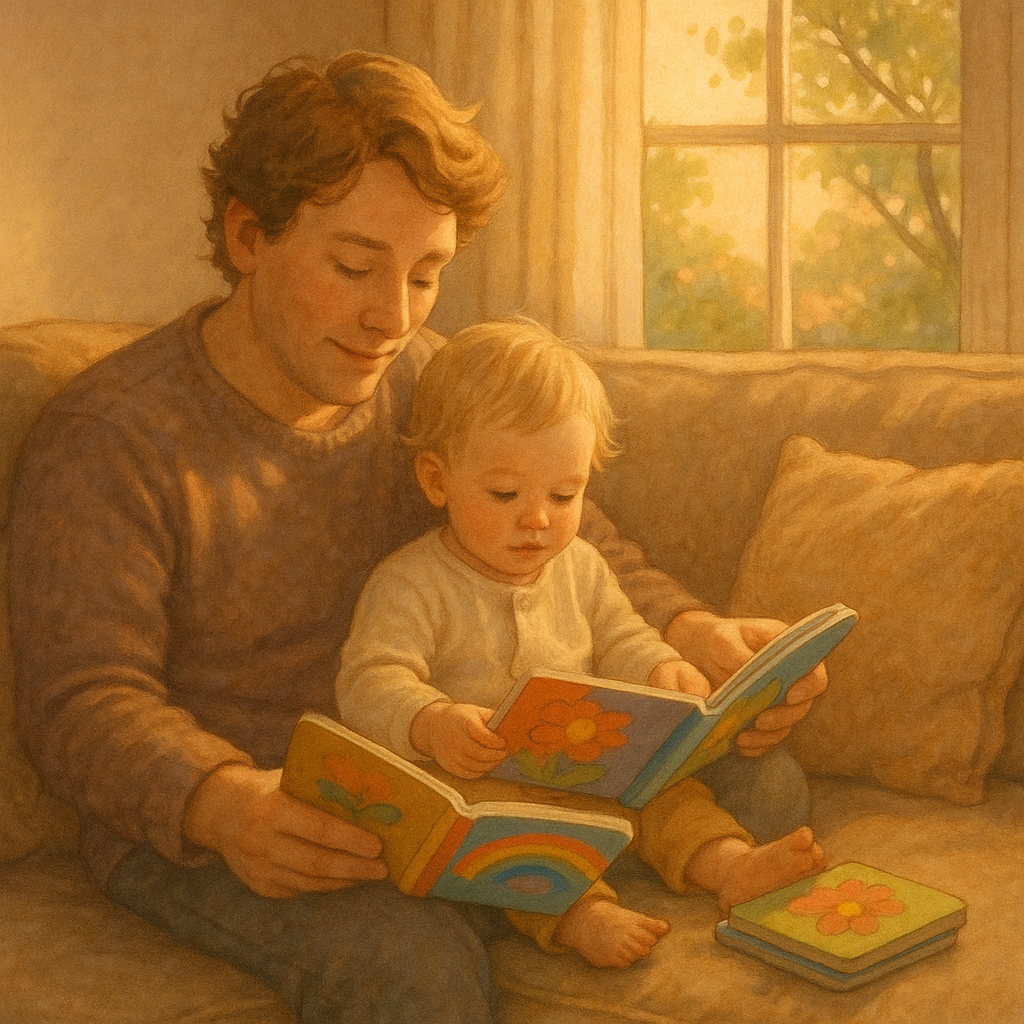
We hear this one a lot — and it's mostly completely normal. For a book to feel "interesting," a child first needs to feel safe: close to a parent, in a comfortable position, with no sense of rush. Settling onto the sofa together after a relaxed evening walk, or finding a quiet moment on the balcony, frames books not as a "reward" but as time spent together. Even if your little one closes the book and wanders off, that moment of sitting side by side still mattered.
## Don't Overlook Libraries and Second-Hand Options
You don't need to buy every book. Public libraries, preschools, and digital library apps can offer free access to a wide range of titles. Solid board books picked up from second-hand groups — once given a good clean — can be wonderful finds too. The real investment isn't in the price of the book; it's in the reading moment you share together.
Foods mentioned in this post
⚕️ The content in this article is for informational purposes only; it is not medical advice. For decisions about your baby's health, consult your pediatrician.