
Ev & Hobiler · May 6, 2026 · 4 min read
Creative Corners at Home This Spring: Setting Up a Play Space for Your Child
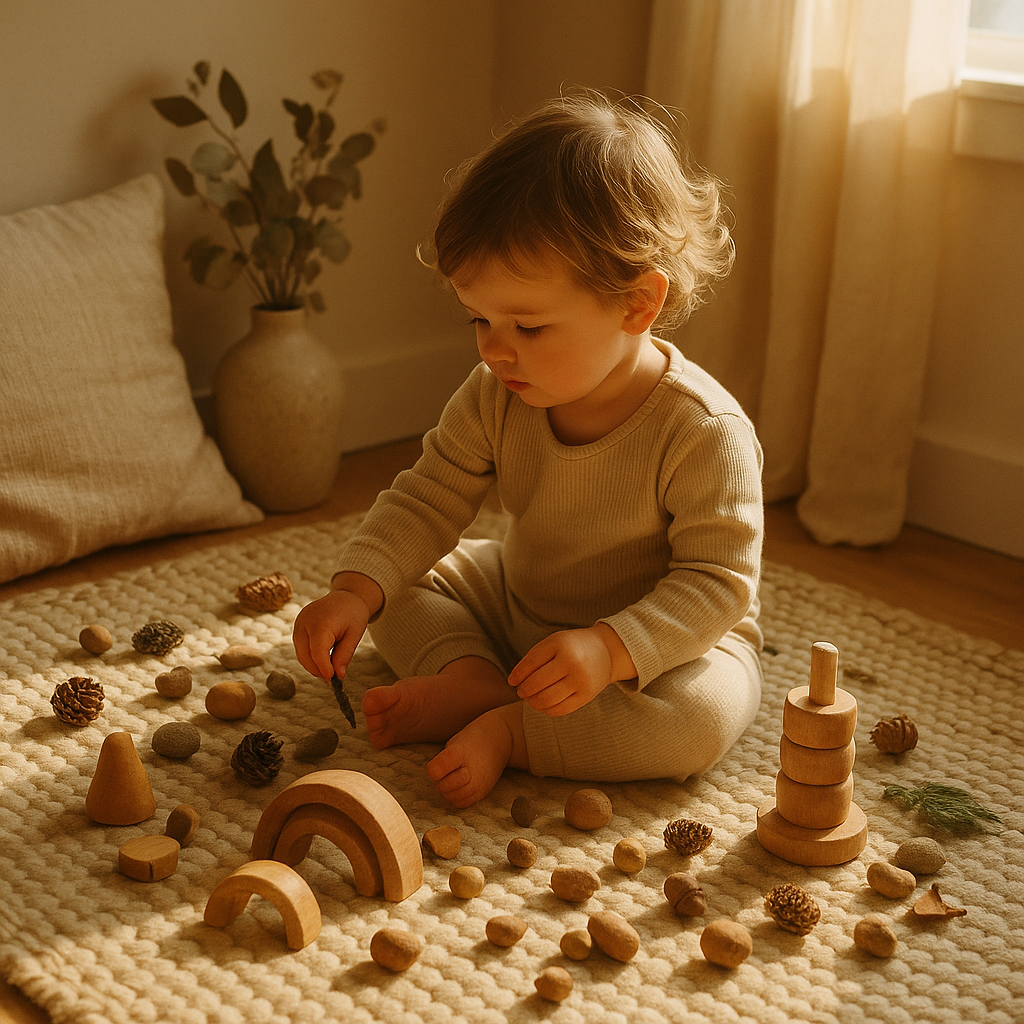
## Why Is a Play Corner So Important?
For young children, "playing" is actually work. Research shows that children who have a dedicated, familiar play space develop independent play skills more quickly. Creating a small, permanent corner in your home — and even refreshing it once a week — gives your child both a sense of security and an endless space for exploration.
## What Kind of Corner Works for Each Age?
**0–12 months:** At this stage, the corner should be very simple. A soft play mat, a few fabric balls or rattles made from different textures — that's plenty. The main goal is to provide high-contrast colors for eye contact and a safe space for reaching and stretching.
**1–3 years:** The age of exploration picks up pace. Place different-sized plastic containers, wooden spoons, and a couple of cardboard boxes in a wicker basket, and watch what your child does with them. At this age, the question "what does this do?" sits at the heart of every game.
**3–5 years:** Symbolic play blossoms. You can set up a "home corner," a "workshop corner," or a "nature corner." For a spring nature corner, a few stones, some dried twigs, a magnifying glass, and an old notebook make a wonderful starting point.
## Spring-Inspired Touches
The season offers a free source of materials for your corner. Bringing home a few pebbles in your pocket, a fallen pinecone, or a colorful leaf on the way back from the park can instantly bring your corner to life. Even just displaying them in a small wooden tray can keep a 3–5 year old busy for hours — counting, sorting, comparing.
Before bringing objects collected from nature indoors, give them a clean, make sure there are no sharp edges, and keep small pieces away from children under 3.
## If You Have a Small Home
A separate room is absolutely not required for a play corner. The space under a coffee table draped with a blanket, a piece of fabric stretched between two chairs pulled into a corner, or even the area under the kitchen table can all do the trick. What matters isn't the size of the space — it's that your child feels it is **their own**.
If space is really tight, try a rotation box system: a box that cycles weekly, with building toys one week and art supplies the next. Limiting the options actually helps children focus better — and this is one of the core principles of the Montessori approach.
## What Is Your Role as a Parent?
Once you've set up the corner, the hardest part might be stepping back. Rather than directing the play, wait for your child to invite you in. When you are invited, be a follower, not a guide: instead of "What should we do now?", try "What are you up to — can I join in?"
If your child never uses the play corner, or if you notice excessive frustration or giving up quickly during play, it may be worth speaking with your pediatrician or a developmental specialist.
Sometimes the most valuable toy can be two cardboard boxes sitting in just the right corner. Give it a try this spring — the results might just surprise you.
Foods mentioned in this post
⚕️ The content in this article is for informational purposes only; it is not medical advice. For decisions about your baby's health, consult your pediatrician.