
Gelişim · June 17, 2026 · 4 min read
Choosing Toys by Developmental Stage: Safe and Suitable Picks for Your Baby
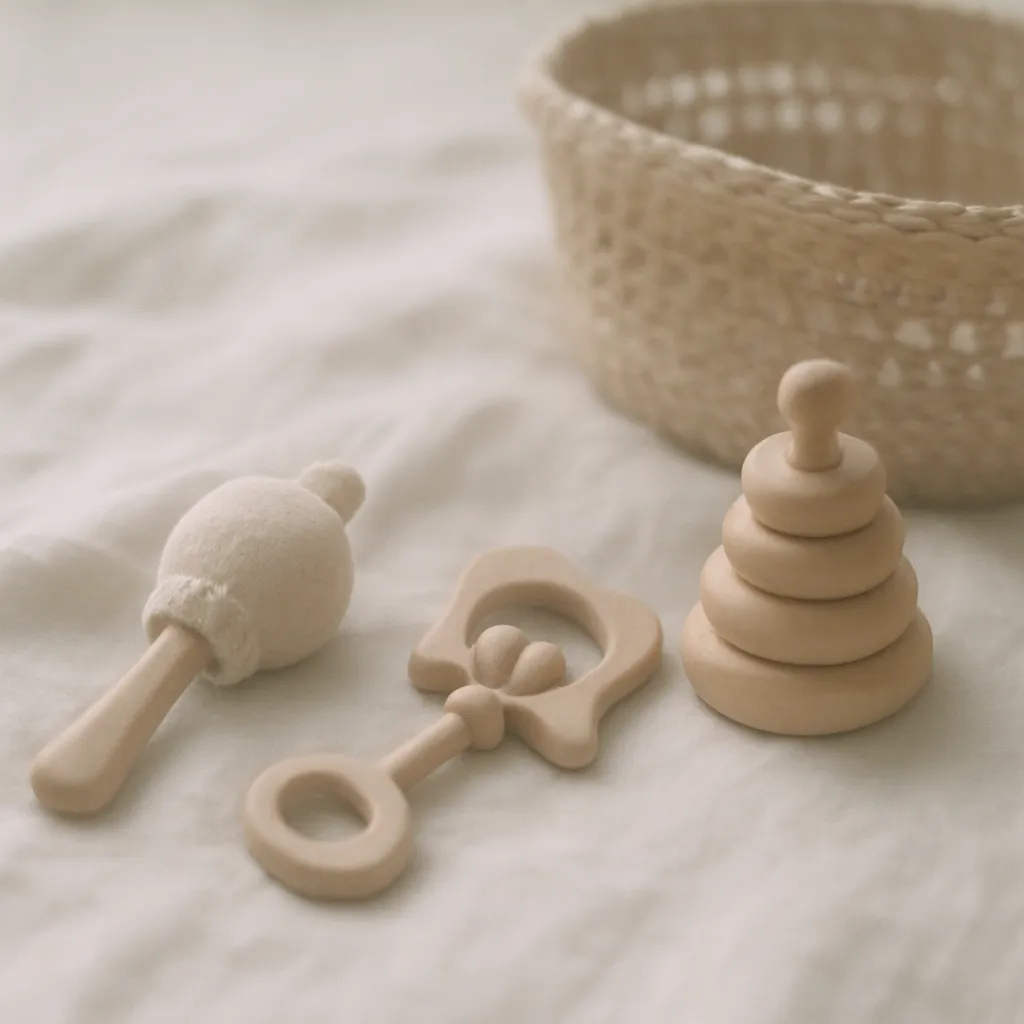
In the calm of the evening, looking at your baby's toy basket, you may wonder which one truly suits them. The good news: you don't need expensive toys or a large collection; what matters is a few safe, simple picks that accompany the skills your little one is developing right now.
Why match toys to development?
Babies gain a new skill almost every month: first they notice sounds and contrasts, then they reach and grasp, and later they bang and stack objects. Choosing a toy to suit the stage means it is neither so easy that it bores nor so hard that it frustrates; it gently supports the very skill emerging at that time. So rather than 'what age is this for', the more helpful question is 'what is my baby exploring right now'.
Safety first: what to watch for
Young babies explore everything by mouthing it, so safety is the first step in choosing. Small parts that could be swallowed, eyes or buttons that come off easily, sharp edges and long cords are not suitable at this stage. Washable, sturdy, clearly sourced and odourless materials are more reassuring. Reading the age label before buying and checking regularly for wear are simple yet effective habits.
Toys suited month by month
0-3 months
Sight and hearing lead the way now: high-contrast cards, soft rattles and gently sounding toys catch their attention. As they cannot yet hold things, the objects you show them are enough.
3-6 months
They begin to reach and grasp; easy-to-hold soft rings, textured fabric toys and light rattles support the hand and hand-eye coordination.
6-9 months
They start to sit and examine objects; stackable soft blocks, containers to peek into and peek-a-boo cloths nourish object permanence.
9-12 months
Pushing and pulling, opening and closing lids and simple sorting draw their interest; wheeled push toys, nesting cups and thick-paged fabric books accompany this skill.
Fewer but better: a pile of toys isn't needed
A large number of toys often scatters attention, while a few simple, open-ended toys give a baby room to explore the same object in different ways. Rotating toys — putting some away and bringing them back a few days later — makes the old feel new again. In the end the most precious 'toy' is still you: smiling face to face, talking and playing together cannot be replaced by any object.
❓ How many toys should my baby have?
There is no set number; usually a few safe, stage-appropriate toys are more useful than a great many. Babies who play more attentively with fewer objects look at the same toys with fresh eyes again thanks to rotation. What matters is not quantity but suitability and safety.
The Maiyko difference: At Maiyko we care about softness and safe, clearly sourced materials in every detail that touches a baby's skin. Showing the same care when choosing toys — favouring washable, sturdy and simple objects — is a small reflection of that approach in the play basket.
maiyko.com · Kids & Babies · Development · Istanbul, Türkiye · © 2026 Maiyko
Foods mentioned in this post
⚕️ The content in this article is for informational purposes only; it is not medical advice. For decisions about your baby's health, consult your pediatrician.