
Sağlık & Spor · May 13, 2026 · 4 min read
Barefoot in Spring: Little Feet Meeting the Earth
## Why Now?
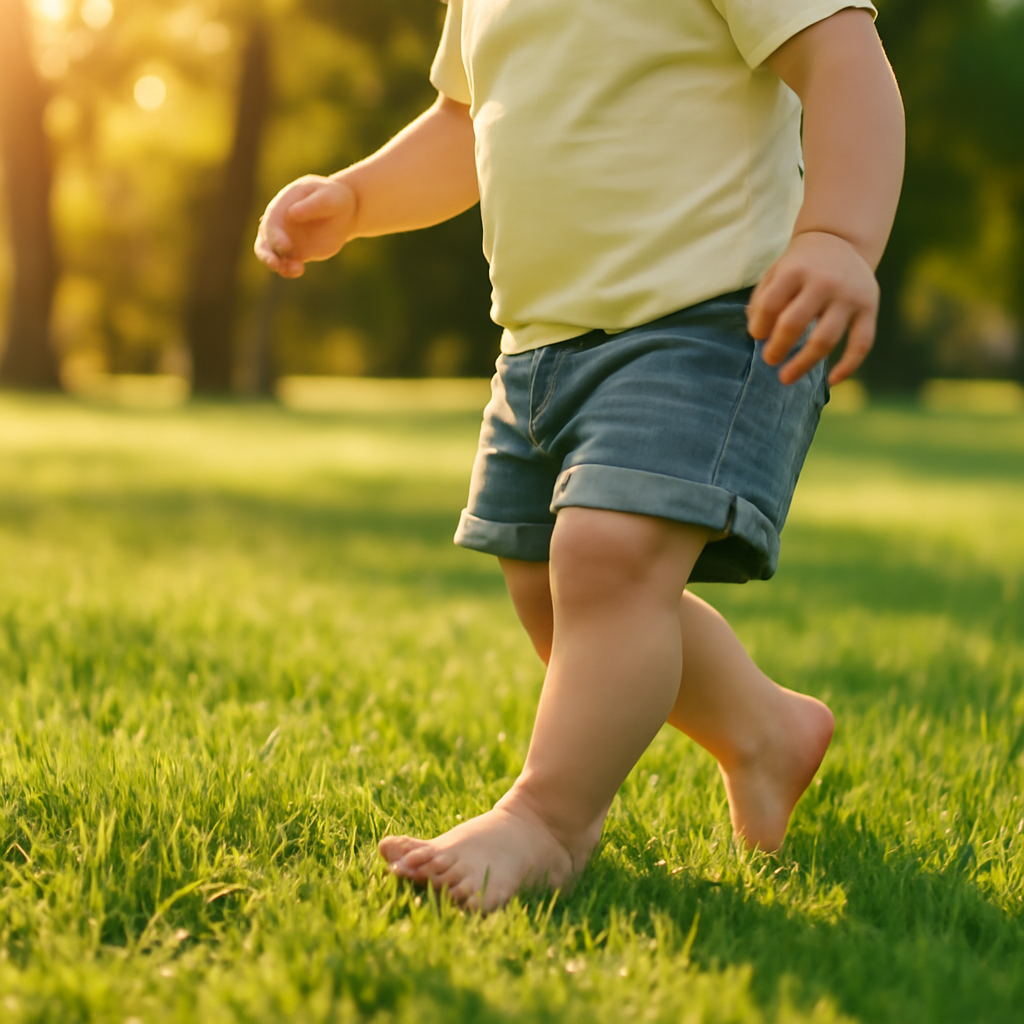
When May arrives, park paths warm up, grass turns green, and that familiar earthy scent drifts through the air. Right in this season, giving your little ones the freedom to leave their shoes by the curb and take a few barefoot steps offers an experience far more valuable than it might seem. **Barefoot walking** is a practice known in child development circles as 'earthing' or 'grounding' — something that has made a comeback in recent years, though its roots go back much further.
## Why Are Little Feet So Curious?
From birth, the soles of our feet are packed with an incredible number of nerve endings. Between the ages of 0 and 5, children's foot bones are still developing, and letting them get acquainted with natural ground surfaces supports the foot muscles and balance mechanisms. The American Academy of Pediatrics (AAP) also views indoor barefoot time for young children positively, noting its benefits for muscle and connective tissue development.
Beyond that, from a **sensory integration** perspective, different surfaces like soil, grass, and sand send rich feedback to your child's brain. 'This is hard, this is soft, this is warm, this is a little wet' — these signals strengthen the brain's ability to position the body in space, known as proprioception.
## How to Create a Safe Barefoot Environment?
Of course, not every surface is suitable. This simple checklist will make things easier:
- **Check the ground first:** Make sure there are no broken glass, sharp stones, cigarette butts, or animal waste.
- **Test the heat:** Asphalt can get surprisingly hot under the May sun. Press your hand down for 3–4 seconds — if it burns your hand, it will burn your child's feet too.
- **Go for grass:** Short, well-kept grassy areas in the park are the ideal starting surface.
- **Sandpits are wonderful:** Sand is arguably one of the richest surfaces for both sensory stimulation and motor skill development.
- **Start short:** If little feet aren't used to it, begin with 5–10 minutes; stop if you notice any redness or sensitivity.
## Little Feet, Big Balance
Research shows that children who grow up barefoot or spend frequent time without shoes score statistically better on **balance and coordination** tests. In practice, this means they step off the swings more safely, fall less when riding a bike, and navigate stairs with greater confidence.
The same principle applies indoors. Carpet, hardwood, tile — each different surface sends a new dataset to your little one's brain. That's why slipper-free time at home can be considered an essential daily 'workout' not to be skipped.
## A Word of Caution and a Reminder
If your child has any foot shape differences, gait irregularities, or complaints of pain, please **consult your pediatrician or a pediatric orthopedic specialist** before making this a regular habit. Every child's development is unique, and professional evaluation always comes first.
But picture this: a healthy child taking their very first barefoot step onto park grass on a warm May evening. That look of surprised delight on their face is probably the most beautiful data point of all.
⚕️ The content in this article is for informational purposes only; it is not medical advice. For decisions about your baby's health, consult your pediatrician.